Alexander Crummell: The Scholar Who Built the Intellectual Architecture of Black Liberation — And Why He Matters Now
Alexander Crummell graduated from Cambridge University when Black intellectual ability was considered a biological impossibility, then spent 50 years building the institutional framework for Black sovereignty. This is the full story of Pan-Africanism's greatest intellectual architect.
EDUCATIONAL SOVEREIGNTY | PAN AFRICAN HISTORY
The Black Metrics
12/16/202510 min read
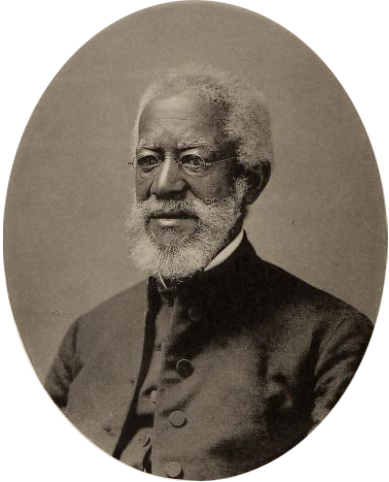
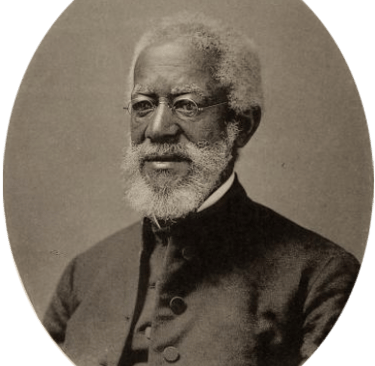
Alexander Crummell: The Scholar Who Built the Intellectual Architecture of Black Liberation — And Why He Matters Now
The name Alexander Crummell appears most often in histories of Black American intellectual life as a supporting character — a figure mentioned in passing as a mentor to W.E.B. Du Bois, a 19th-century minister and scholar whose ideas prefigured Du Bois's famous concept of the Talented Tenth. This framing is accurate as far as it goes. But it fundamentally misrepresents the relationship between the two men and, in doing so, obscures the true significance of Crummell's contribution.
Du Bois did not simply reference Crummell or build on his ideas in the way that any intellectual builds on predecessors. He devoted a full chapter of The Souls of Black Folk — arguably the most important work of African American intellectual history — to a portrait of Crummell that reads as a sustained act of tribute, almost of reverence. In Du Bois's own accounting, Crummell was not a predecessor to be acknowledged in footnotes. He was a spiritual and intellectual father. The tradition of rigorous Black scholarship, the vision of Black institutional independence, the framework for understanding Black liberation as requiring both moral and intellectual development — all of it traced, in Du Bois's mind, back to Alexander Crummell.
Understanding why Du Bois held this view, and whether it is justified, requires engaging seriously with what Crummell actually built across a life of 79 years, three continents, and repeated encounters with the most brutal expressions of American racial exclusion.
Beginnings: The Education of an Unlikely Cambridge Graduate
Alexander Crummell was born in New York City in 1819, the grandson of an African man who had been enslaved and the son of a free Black man who was himself a committed abolitionist. He grew up in a family that understood the relationship between intellectual development and liberation with particular clarity. His father had attempted to attend school with white children and been refused — an early experience that shaped the family's political orientation and Crummell's own understanding of what education meant as a political act.
The early chapters of Crummell's educational journey read as a catalogue of systematic exclusion. In 1835, he was admitted to a newly opened academy in Noyes Academy, New Hampshire — one of the first integrated schools in America. The local community's response was to drag the school building into a swamp with oxen and formally dissolve the institution rather than permit Black and white students to be educated together. This was not the spontaneous violence of a mob. It was organized community action — a demonstration that white supremacy in the antebellum North was not simply individual prejudice but a collective social commitment backed by collective action.
When Crummell sought admission to Episcopal theological seminaries in the United States, he was refused on racial grounds by institutions whose stated mission was the training of Christian ministers. The contradiction between the professed values of these institutions and their actual practices apparently troubled them not at all.
What these repeated exclusions ultimately produced was not a broken man but a man who understood, from direct experience, that the problem was structural rather than individual. No amount of individual excellence, Christian virtue, or intellectual qualification was going to open the doors of American institutions that had been built to remain closed to Black people. The solution had to be found elsewhere.
Crummell found it across the Atlantic. In 1848, he traveled to England where the Episcopal Church's overseas mission network was less constrained by American racial hierarchies. He was ordained as a priest and subsequently pursued formal academic study. In 1853, he achieved something that was, by the statistical and social standards of the time, barely conceivable: he graduated from Queens' College, Cambridge University with a Bachelor of Arts degree.
What the Cambridge Degree Actually Meant
It is difficult, from the vantage point of 2026, to fully appreciate the political weight of what Crummell accomplished at Cambridge. The obstacle to this appreciation is the fact that we now know it was possible — that Black scholars could and did achieve the highest levels of academic qualification at the world's most prestigious institutions. In 1853, this was not established fact. It was contested premise.
The dominant intellectual framework of mid-19th century Europe was what is now called scientific racism — the claim, dressed in the language of empirical science, that racial hierarchies were natural rather than constructed, that African people were biologically less capable of intellectual development than European people, and that the subordination of African-descended populations was therefore not a moral catastrophe but a natural order. This framework was not fringe. It was mainstream. It was taught in universities, published in scientific journals, debated by parliamentarians, and used to justify every aspect of colonial and slave systems across the globe.
Into this context walked Alexander Crummell with his Cambridge degree. Not a Cambridge degree earned under special accommodations or charitable admission. A degree earned through the same coursework, the same examinations, and the same academic standards applied to every other Cambridge student. A degree that represented a formal credential from one of the most intellectually rigorous institutions in the world, conferred on a Black man in the middle of the 19th century.
This was not simply a personal achievement. It was a political and intellectual event. It was, as Crummell himself understood it, a refutation — empirical evidence against the most foundational claim of the white supremacist intellectual framework of his era. If the claim that Black people were intellectually inferior to Europeans were true, Alexander Crummell's Cambridge degree would not exist. It existed. Therefore, the claim was false.
Crummell never stopped making this argument. For the rest of his life, he insisted that Black intellectual excellence was not exceptional but natural — that it flowered wherever it was given the conditions to grow, and that the absence of those conditions was the product of deliberate deprivation rather than natural incapacity.
Liberia: A Laboratory for Black Governance
With his Cambridge degree, Crummell made a decision that would define the next two decades of his life: he did not return to the United States. He went to Liberia.
The West African nation founded by formerly enslaved and free-born Black Americans represented, in the mid-19th century, one of the only living experiments in Black self-governance in the Atlantic world. It was an imperfect experiment, complicated by the complex relationships between the Americo-Liberian settler community and the indigenous populations of the region, and by the continuing influence of the American Colonization Society that had sponsored much of its founding. But it was an experiment, and Crummell was drawn to it with the same instinct that draws serious theorists to opportunities to test their ideas against reality.
He spent twenty years in Liberia — from 1853 to 1873 — as a missionary, educator, and professor at Liberia College. These were not twenty years of comfortable academic life. Liberia in the 1850s and 1860s was a nation under constant pressure: managing internal political conflicts, navigating external threats from European colonial expansion, struggling with the material difficulties of building infrastructure and institutions in conditions of significant poverty and frequent disease.
In this environment, Crummell developed what might be called a practical Pan-African philosophy. He argued that the diaspora — the Africans and African-descended people who had been dispersed across the Americas and Europe — had both a right and a responsibility to contribute to the development of the African continent. This was not, in Crummell's framework, charity or missionary condescension. It was the return of capacity that had been stolen: the skills, the education, the organizational knowledge that the Atlantic slave trade had removed from Africa could and should be brought back in service of African sovereignty and development.
He also developed, through direct observation of Liberian governance, his mature understanding of what self-governance required. It was not sufficient, he concluded, to have political independence if the cultural and intellectual frameworks governing a society remained shaped by external — particularly colonial — values. True sovereignty required what he called the right of a people to define their own moral and cultural narrative. A nation that governed itself politically but educated its children in ways that diminished their confidence in their own heritage was not truly free. It was formally independent and culturally colonized.
This analysis — that cultural and intellectual sovereignty is as important as political sovereignty, and that building it requires independent institutions — is one of Crummell's most enduring contributions to Pan-African thought. It connects directly to the full sovereignty framework that the Pan-African tradition has been developing ever since.
The Return: Reconstruction and Its Betrayal
Crummell returned to the United States in 1873, in the midst of the Reconstruction era. The political landscape he found was one of extraordinary promise and extraordinary danger simultaneously. The 13th, 14th, and 15th Amendments had abolished slavery, established Black citizenship, and guaranteed Black voting rights. For a brief, remarkable period in Southern history, Black men were voting, holding office, and exercising political power at levels that would not be seen again for nearly a century.
And it was being violently dismantled. The Ku Klux Klan, the Red Shirts, and allied white supremacist organizations were conducting a systematic campaign of terror against Black political participation. The federal government was progressively withdrawing the military presence that had provided some protection for Black political rights. The political compromise that ended Reconstruction in 1877 would effectively hand the South back to the forces that had led the Confederacy, leaving Black Southerners to face the violence and disenfranchisement of the Jim Crow era without federal protection.
Crummell watched this happen and drew the conclusion that his own life experience had been pointing toward since childhood: that political rights granted by and dependent on the continued goodwill of hostile governments were fragile things. What was given could be taken. What was built — institutions, educational systems, intellectual traditions, cultural frameworks — was harder to dismantle.
He spent the 1870s and 1880s building as a parish priest in Washington, D.C., establishing St. Luke's Episcopal Church as both a religious community and a center of Black intellectual and cultural life. He wrote extensively, developing his philosophy of institutional independence into a comprehensive framework that addressed education, morality, economics, and political organization as interconnected elements of the same liberation project.
The American Negro Academy: An Institution for Black Excellence
In 1897, at the age of 78 — an age at which most men are looking backward rather than forward — Crummell founded the American Negro Academy. It was the first major organization in the United States dedicated explicitly to Black academic and intellectual excellence.
The ANA was not a social club or a debating society, though it incorporated both functions. It was a professional organization for Black scholars, writers, and intellectuals — a body that could produce original research, respond systematically to the racist pseudo-scholarship of the era, and build a cumulative intellectual tradition that would outlast any individual contributor.
Its founding membership included W.E.B. Du Bois, the young scholar who had attended the early Pan-African conferences and was developing the theoretical framework that would shape 20th-century Black intellectual life. It included Paul Laurence Dunbar, the poet who was bringing Black vernacular language into American literary consciousness. It included a range of scholars, ministers, educators, and writers who represented the breadth of Black intellectual life in post-Reconstruction America.
The ANA's founding came at a specific moment: the rise of Booker T. Washington's philosophy of industrial education and political accommodation, which was drawing funding, prestige, and national attention by offering white America a version of Black advancement that did not challenge racial hierarchy. Crummell and Du Bois, while they disagreed on various tactical questions, shared a fundamental rejection of this framework. They believed that the path to Black liberation ran through the development of the full range of Black intellectual capacity — not just the industrial and vocational skills that Washington's model emphasized, but also the humanities, the sciences, the philosophical and legal traditions that equipped people to govern, to lead, and to define the terms of their own freedom.
The founding of the ANA was thus not simply an academic exercise. It was a political act — a statement that Black people claimed the right to think at the highest levels and to build the institutions that would sustain that thinking across generations.
This is exactly the kind of institution building that Martin Robison Delany had argued was necessary, that Henry Sylvester Williams was attempting to build on an international scale through the African Association and the Pan-African Conference, and that the broader Pan-African tradition has consistently identified as the foundation of genuine sovereignty.
The Intellectual Legacy: What Crummell Built That Endures
Crummell died in 1898, one year after founding the ANA, two years before Williams organized the first Pan-African Conference. He did not live to see the flowering of the movement he had spent his life nurturing. But what he left behind was more durable than any organization or conference.
He left behind a framework. An understanding of what intellectual and cultural sovereignty required, developed through decades of direct experience building institutions under conditions of hostility and deprivation. An analysis of the relationship between education, morality, economic development, and political freedom that anticipated the most sophisticated 20th-century Pan-African theories. A model of what it looked like to maintain rigorous intellectual standards while remaining committed to the practical work of liberation.
Du Bois's famous chapter on Crummell in The Souls of Black Folk concludes with an image of Crummell's death as a quiet passing into peace after a life of struggle — but the broader portrait in that chapter is of a man whose significance Du Bois felt as a living weight, a sense that he was carrying forward something Crummell had entrusted to the next generation.
That is the right way to think about Crummell's legacy: not as historical artifact but as living trust. The full sovereignty framework that Pan-African thinkers continue to develop — the insistence that economic, educational, cultural, and political sovereignty are inseparable and must be built together — is the framework Crummell spent 79 years constructing. It is an inheritance that belongs to every Black person who understands that the mind is a political terrain and that its liberation is not separate from but essential to any larger liberation.
In 2026, when questions about who controls Black educational narratives, who funds Black intellectual institutions, and who defines the standards by which Black excellence is measured remain urgent and contested, Crummell's century-old answers retain their precision.
Build your own institutions. Define your own standards. Trust the capacity of your own people. Do the work.
Suggested Reading List
To truly engage with Crummell’s sophisticated world-view, consider these primary and secondary sources:
Africa and America by Alexander Crummell: A collection of his most influential addresses and sermons regarding the destiny of the race.
The Souls of Black Folk (Chapter XII: Of Alexander Crummell) by W.E.B. Du Bois: A moving tribute that captures the spiritual weight of Crummell’s life.
Alexander Crummell: A Study of Civilization and Discontent by Wilson Jeremiah Moses: The definitive modern biography exploring his complex relationship with African and American identity.
The Future of Africa by Alexander Crummell: His reflections on his time in Liberia and his vision for a global African resurgence.
Community Discussion (The Bantaba)
Crummell was rejected from American schools but succeeded at Cambridge. How does his story change our perspective on the "global" nature of the Black struggle in the 1800s?
Crummell emphasized "Institutional Autonomy." In 2026, do you believe it is more important to improve existing institutions or to build new, independent ones?
How did Crummell’s vision of the "Talented Tenth" differ from modern ideas of elitism or leadership?
Crummell spent twenty years in Liberia. How did his "Pan-African" experience in Africa likely change his strategy when he returned to the United States?
If Alexander Crummell were alive today, what specific "pseudo-science" or modern narrative do you think he would challenge through his scholarship?
Continue the series:
What Our Pan-African Ancestors Were Trying to Tell Us: Unity, Sovereignty, and the Blueprint Diaspora Wars Are Destroying
Martin Robison Delany: The Blueprint for Black Economic Self-Determination
THE BLUEPRINT
Contact
hello@blackmetrics.space
Copyright © 2026 The Black Metrics. All Rights Reserved.
The BlaCK METRICS
The Pillars
Strategic Stream Blog