Alexander Crummell: The Unsung Architect of Black Self-Reliance and Intellectual Excellence
This Strategic Briefing spotlights Alexander Crummell as a foundational yet often overlooked architect of Black intellectual and Pan African thought in the 19th century. While figures like Frederick Douglass dominate popular narratives, the briefing argues that Crummell’s influence on education, racial solidarity, and institutional development was equally transformative. It traces his journey from facing racial exclusion in the United States to becoming the first officially recorded Black graduate of Queens' College, Cambridge, and his two decades of work in Liberia advancing Black self governance and global African unity. The briefing also explores his intellectual contributions, including his early articulation of what later became known as the Talented Tenth, an idea that would influence W. E. B. Du Bois. At its core, the briefing presents Crummell as a visionary who championed education, independent Black institutions, and moral leadership as the pathway to collective advancement, laying critical groundwork for modern Pan Africanism and Black self determination.
EDUCATIONAL SOVEREIGNTY | PAN AFRICAN HISTORY
The Black Metrics
12/16/20254 min read
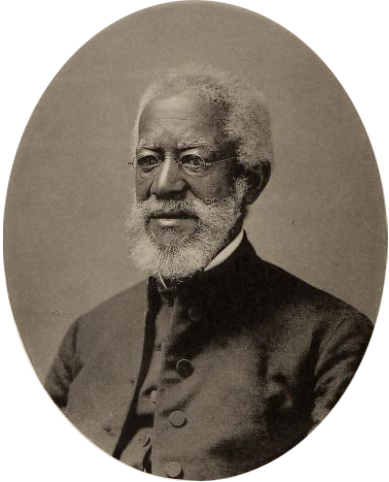
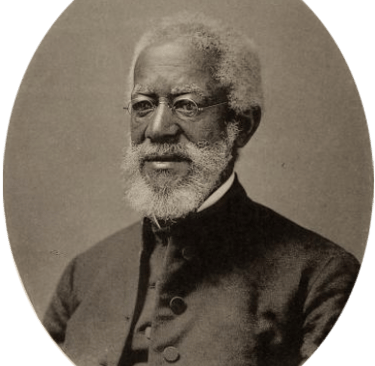
The Scholar of Sovereignty: Alexander Crummell and the Architecture of the Black Mind
In the pantheon of 19th-century Black American leaders, figures like Frederick Douglass often command the spotlight for their fiery oratory and political activism. Yet, quietly but powerfully shaping the intellectual and moral landscape was Alexander Crummell (1819–1898). An Episcopal minister, scholar, and unwavering advocate for Institutional Autonomy, Crummell’s life was a testament to the belief that the path to freedom was paved with rigorous scholarship and moral discipline.
From New York Barriers to Cambridge Honors
Crummell’s journey began in an America that denied Black people basic citizenship, let alone access to higher education. Born free in New York, he faced systemic exclusion at every turn. In 1835, he and his classmates were driven out of an academy in New Hampshire by a mob of local farmers who dragged the school building into a swamp with oxen. When he was later rejected from Episcopal seminaries in the United States due to his race, Crummell refused to shrink his ambitions.
He set his sights across the Atlantic. In 1853, he achieved a monumental feat by becoming the first officially recorded Black student to graduate from Cambridge University (Queens' College). At a time when pseudo-scientific racism claimed that people of African descent were intellectually inferior, Crummell’s degree was a physical rebuttal to white supremacy. Statistics from that era show that less than 0.01% of the Black population in the West held a university degree, making his achievement a statistical anomaly that forced the academic world to take notice.
The Liberian Experiment: A Laboratory for Self-Rule
With his Cambridge degree, Crummell dedicated twenty years (1853–1873) to missionary work and education in Liberia. This West African nation, settled by formerly enslaved people and free-born Black Americans, became his laboratory for ideas on self-governance.
As a professor at Liberia College, he championed the idea that the diaspora had a duty to contribute their skills to the African continent. This was an early form of Pan-Africanism. Crummell argued that for a nation to be truly sovereign, it must control its own cultural and moral narrative. He believed that West Africa could become a beacon of "Christian civilization," a term he used to describe a society rooted in high moral standards, legal order, and economic cooperation.
The Intellectual Framework: Beyond Integration
Crummell's influence was most profound in his prolific writings. Through essays and sermons, he meticulously crafted a framework for Black progress that prioritized Institutional Autonomy over simple social integration. His major works, such as The Future of Africa (1862) and Africa and America (1891), explored three crucial themes:
The Concept of "Civilization": For Crummell, this encompassed moral, intellectual, and material uplift. He believed that Black people could overcome systemic oppression only by out-studying and out-producing their oppressors.
Independent Institutions: He argued forcefully that Black people must establish their own churches, schools, and cultural organizations. He believed that relying on white institutions for validation was a form of psychological bondage.
The "Talented Tenth" Origins: Long before W.E.B. Du Bois popularized the term, Crummell articulated the need for a highly educated, moral elite to lead the masses. He believed that leadership was a burden of service, not a badge of status. Du Bois later dedicated an entire chapter to Crummell in The Souls of Black Folk, acknowledging him as a spiritual and intellectual father.
The American Negro Academy: A Lasting Legacy
Upon his return to the United States in 1873, Crummell found a nation in the throes of the failed Reconstruction era. He realized that political rights were fragile without an intellectual foundation. In 1897, at the age of 78, he founded the American Negro Academy (ANA).
The ANA was the first major platform in the United States dedicated to Black academic excellence. It brought together scholars like Du Bois and Paul Laurence Dunbar to challenge the "Jim Crow" scholarship of the day. By the late 1890s, the literacy rate among Black Americans had risen to approximately 43%, up from just 5% at the end of the Civil War. Crummell saw this rising tide of literacy as the raw material for a new, sovereign Black intellect.
Why Crummell Matters in 2026
Alexander Crummell reminds us that true leadership involves both quiet perseverance and bold intellectual vision. He was a pioneer who:
Demonstrated the Power of Education: He viewed the mind as the primary battlefield for liberation.
Laid the Groundwork for Global Solidarity: He saw the African Diaspora as a single, interconnected body.
Championed Self-Determination: He taught that freedom is not something granted by a government but something built through independent institutions.
Though he is not as widely quoted as Douglass or King, Alexander Crummell was the architect of the Black intellectual tradition. His legacy continues to inspire those who believe that excellence is the most effective form of protest.
Suggested Reading List
To truly engage with Crummell’s sophisticated world-view, consider these primary and secondary sources:
Africa and America by Alexander Crummell: A collection of his most influential addresses and sermons regarding the destiny of the race.
The Souls of Black Folk (Chapter XII: Of Alexander Crummell) by W.E.B. Du Bois: A moving tribute that captures the spiritual weight of Crummell’s life.
Alexander Crummell: A Study of Civilization and Discontent by Wilson Jeremiah Moses: The definitive modern biography exploring his complex relationship with African and American identity.
The Future of Africa by Alexander Crummell: His reflections on his time in Liberia and his vision for a global African resurgence.
Community Discussion (The Bantaba)
Crummell was rejected from American schools but succeeded at Cambridge. How does his story change our perspective on the "global" nature of the Black struggle in the 1800s?
Crummell emphasized "Institutional Autonomy." In 2026, do you believe it is more important to improve existing institutions or to build new, independent ones?
How did Crummell’s vision of the "Talented Tenth" differ from modern ideas of elitism or leadership?
Crummell spent twenty years in Liberia. How did his "Pan-African" experience in Africa likely change his strategy when he returned to the United States?
If Alexander Crummell were alive today, what specific "pseudo-science" or modern narrative do you think he would challenge through his scholarship?
THE BLUEPRINT
Building the future of the global African Diaspora through data-driven storytelling and the Eight Pillars of Sovereignty. From survival to ownership.
Contact
Subscribe To the NewsLETTER
hello@blackmetrics.space
Copyright © 2026 The Black Metrics. All Rights Reserved.
The BlaCK METRICS