Amy Jacques Garvey | The Metric of Organizational Strategy
This Strategic Briefing explores the systems-based leadership of Amy Jacques Garvey and her critical role in sustaining the Universal Negro Improvement Association during its most challenging years. Moving beyond personality-driven narratives, this analysis positions her as the architect of organizational continuity, transforming ideas into structured, repeatable systems. Through the lens of the Politics Pillar, this briefing breaks down how effective movements are built using organizational charts, standard operating procedures, and global communication networks. By examining how she operationalized the vision of Marcus Garvey, readers will gain a clear blueprint for turning vision into coordinated action. This is not just history, it is a practical guide to building systems that outlast individuals, scale across borders, and move communities toward sovereignty.
POLITICAL, BUSINESS, & EMPLOYMENT SOVEREIGNTY | PAN AFRICAN HISTORY
The Black Metrics
3/20/20265 min read
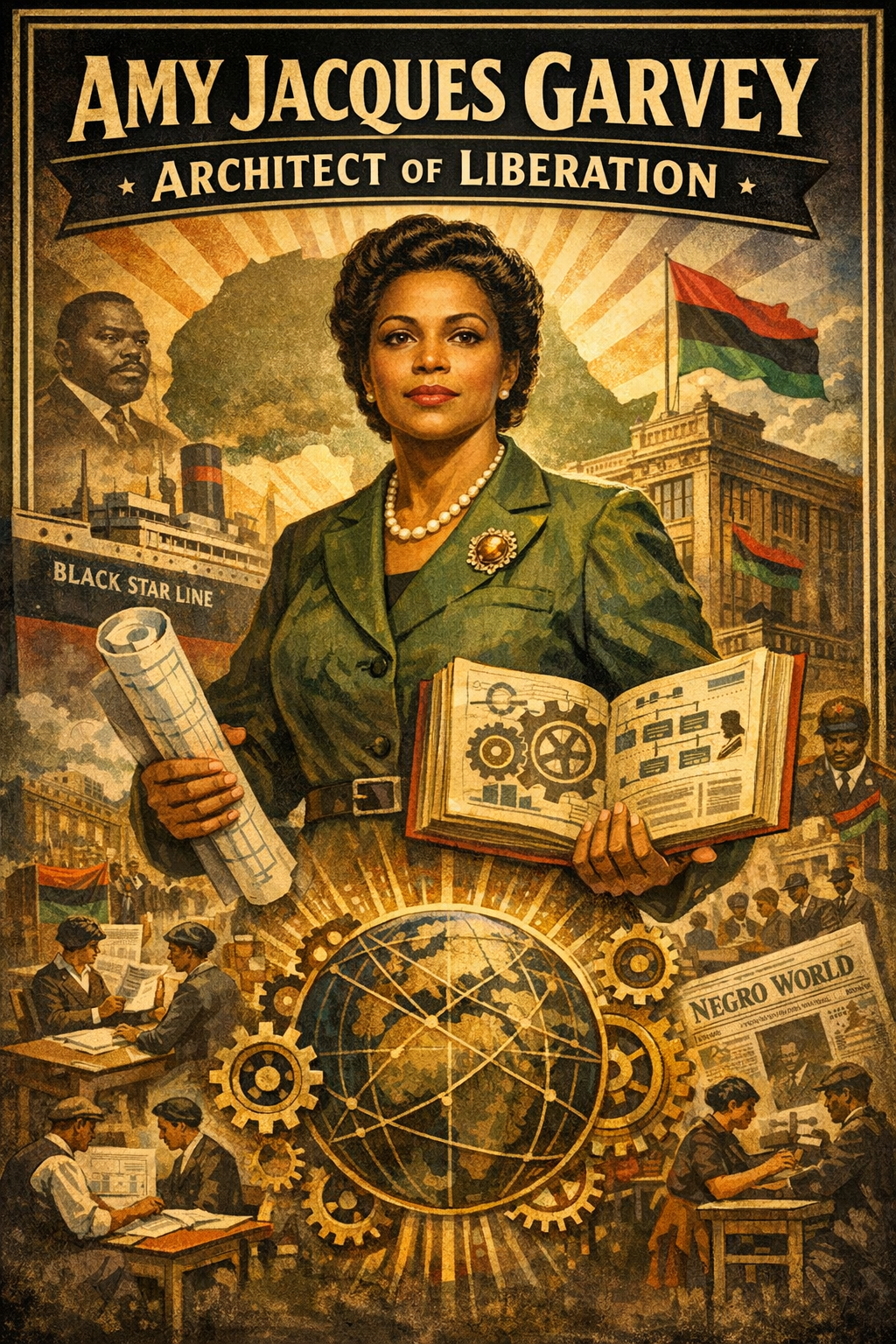
Amy Jacques Garvey | The Machine of Liberation
Peace and blessings family. As we continue our Strategic Briefings for Women’s History Month, we move from the intellectual foundation of Anna Julia Cooper to the organizational execution of Amy Jacques Garvey. We acknowledge the ancestors who built these frameworks and we acknowledge you for doing the work to manifest them today.
Setting the Record Straight
In our study of history, accuracy is a metric of power. It is essential to distinguish between the two Amys of the Garvey movement. Amy Ashwood Garvey was a powerful co founder, activist, and organizer. However, this briefing focuses on Amy Jacques Garvey, the strategic mind who managed the Universal Negro Improvement Association during its most difficult years. She was the one who took thousands of pages of notes and edited them into the definitive plan for our liberation.
The Universal Negro Improvement Association
To understand Amy Jacques Garvey, you must understand the Universal Negro Improvement Association, or the UNIA. This was not a social club. It was a government in exile. It had its own flag, its own anthem, and its own shipping line. Amy Jacques Garvey was the administrator who ensured that the Politics Pillar remained functional even when external forces tried to destroy it.
The Engine of Sovereignty: Understanding the Politics Pillar
Amy Jacques Garvey did not just manage people. She managed a System of Coordination. To understand her success, we look at the Politics Pillar. In our work, this pillar is not about voting for someone else. It is about how we organize ourselves to be our own bosses. Think of the movement as a powerful engine. For that engine to run, it needs two things: a Blueprint and a Manual.
1. The Organizational Chart (The Blueprint)
An Organizational Chart is simply the Blueprint of the engine. Just like a drawing for a car shows exactly where the battery and the tires go, this chart shows who is responsible for each part of the work. It defines the Lead Engineer, the Fuel Manager, and the Navigator. When you have a Blueprint, no one is guessing. Everyone has a solid place to stand, which removes the anxiety of confusion.
2. Standard Operating Procedures (The Instruction Manual)
Standard Operating Procedures are the Instruction Manual for the engine. Even a perfect engine will stop if you do not know how to change the oil. The Manual is a set of written steps that anyone can follow. It explains exactly how we welcome new members, how we protect community funds, and how we publish our news. Amy Jacques Garvey wrote the rules so the machine kept running even when leaders were away. This is called System Strength.
3. The Global Signal (The Communication Web)
To keep engines running together across the world, we need a Global Signal. Amy Jacques Garvey used the Negro World newspaper to send this signal. If a person in Jamaica and a person in New York are both reading the same Manual, they are working together even if they never meet. This is Pan Africanism in practice. We are all tuned into the same frequency of freedom.
Strategic Implementation | Applying the Blueprint to Your Projects
We use the Metric of Organizational Strategy today to evaluate our own work. To move toward true sovereignty in 2026, you can apply the Amy Jacques Garvey model using these three steps:
Step 1: Build the Machine, Not the Persona
Sovereignty requires systems that can outlive the founder. If your business or project stops when you stop, it is a job, not a system. Use the Politics Pillar to create an organizational chart and standard operating procedures for your vision.
Step 2: Practice Collective Employment
Use the Employment Pillar to ensure that your success creates opportunities for others. Just as the Universal Negro Improvement Association had its own groceries and laundries, we must look at our current projects and ask: How many people in my community am I hiring? How much of my supply chain is owned by us?
Step 3: Coordinate the Diaspora
True Pan Africanism means finding ways to connect your digital or physical products to the global Black market. Use modern digital tools to build a network that spans beyond your local city. When we coordinate our spending and our production, we become an unshakeable economic force.
The Core Truth
The blueprint is already there. Amy Jacques Garvey left us the manual. She proved that when we are organized, we are a machine that cannot be stopped. It is time for us to stop being a crowd and start being a system.
Recommended Reading for Strategic Mastery
If you want to move from being a student to being a lead architect of your own systems, these three texts are essential:
The Philosophy and Opinions of Marcus Garvey (Edited by Amy Jacques Garvey):
This is the primary manual for the Universal Negro Improvement Association. It contains the strategic directives and the organizational logic that Amy Jacques Garvey preserved for future generations.
Garvey and Garveyism (by Amy Jacques Garvey): This text provides an insider’s look at the logistics of the movement. It explains how they managed the Business Pillar and the Politics Pillar while under constant external pressure.
The Veiled Garvey: The Life and Times of Amy Jacques Garvey (by Ula Yvette Taylor): This biography provides a modern analytical look at her specific role as a strategist and how she navigated the internal and external challenges of building a global machine.
Community Discussion (The Bantaba)
1. System vs Personality
How does the leadership approach of Amy Jacques Garvey challenge the idea of personality-driven movements? What are the risks of building around individuals instead of systems?
2. Organizational Blueprint
If you were to create an organizational chart for your current project, what roles would need to exist for it to function without you? What gaps do you currently see?
3. Standard Operating Procedures (SOPs)
What are three key processes in your work that could be turned into written procedures today? How would documenting them increase stability and scalability?
4. System Strength Under Pressure
The Universal Negro Improvement Association faced constant external pressure. What systems can you build now to ensure your work continues during disruption or crisis?
5. Communication and Coordination
Amy Jacques Garvey used media as a unifying signal. What is your modern equivalent of a “global signal”? How are you ensuring consistent messaging across your network?
6. Operationalizing Vision
How did Marcus Garvey’s vision become actionable through structure? What vision in your life or community still lacks a system for execution?
7. Collective Employment
In what ways can your current work create economic opportunities for others? How can you intentionally design your system to circulate resources within your community?
8. Diaspora Coordination
What would it look like for your project to operate beyond your local environment? What systems or tools would you need to connect with a global audience?
9. Measuring the Metric
How do you currently measure organizational effectiveness? What metrics could you introduce to track growth, coordination, and impact?
10. From Crowd to System
What is one immediate step you can take this week to move from informal activity to structured operation?
The Final Metric
As you finish this briefing, remember that reading is only the first step. The Metric of Organizational Strategy is measured by what you build. Take the Blueprint and the Manual and apply them to your projects today.
Stay focused. Stay strategic.
THE BLUEPRINT
Building the future of the global African Diaspora through data-driven storytelling and the Eight Pillars of Sovereignty. From survival to ownership.
Contact
Subscribe To the NewsLETTER
hello@blackmetrics.space
Copyright © 2026 The Black Metrics. All Rights Reserved.
The BlaCK METRICS