Garvey's UNIA Principles: Could They Launch a Powerful 2025 Movement?
This Strategic Briefing examines the life and legacy of Marcus Garvey, the founder of the Universal Negro Improvement Association (UNIA), and explores how his vision of Global Empowerment could be reimagined for the modern era. Garvey’s movement was the largest mass mobilization in history for people of African descent. It was built on the bold premise of total economic, political, and cultural autonomy for the global diaspora. By moving beyond the limitations of his time, we can see how his focus on self-determination and collective agency provides a blueprint for contemporary community building and international cooperation.
ECONOMIC, EDUCATIONAL, & POLITICAL SOVEREIGNTY | PAN AFRICAN HISTORY
The Black Metrics
11/17/20254 min read
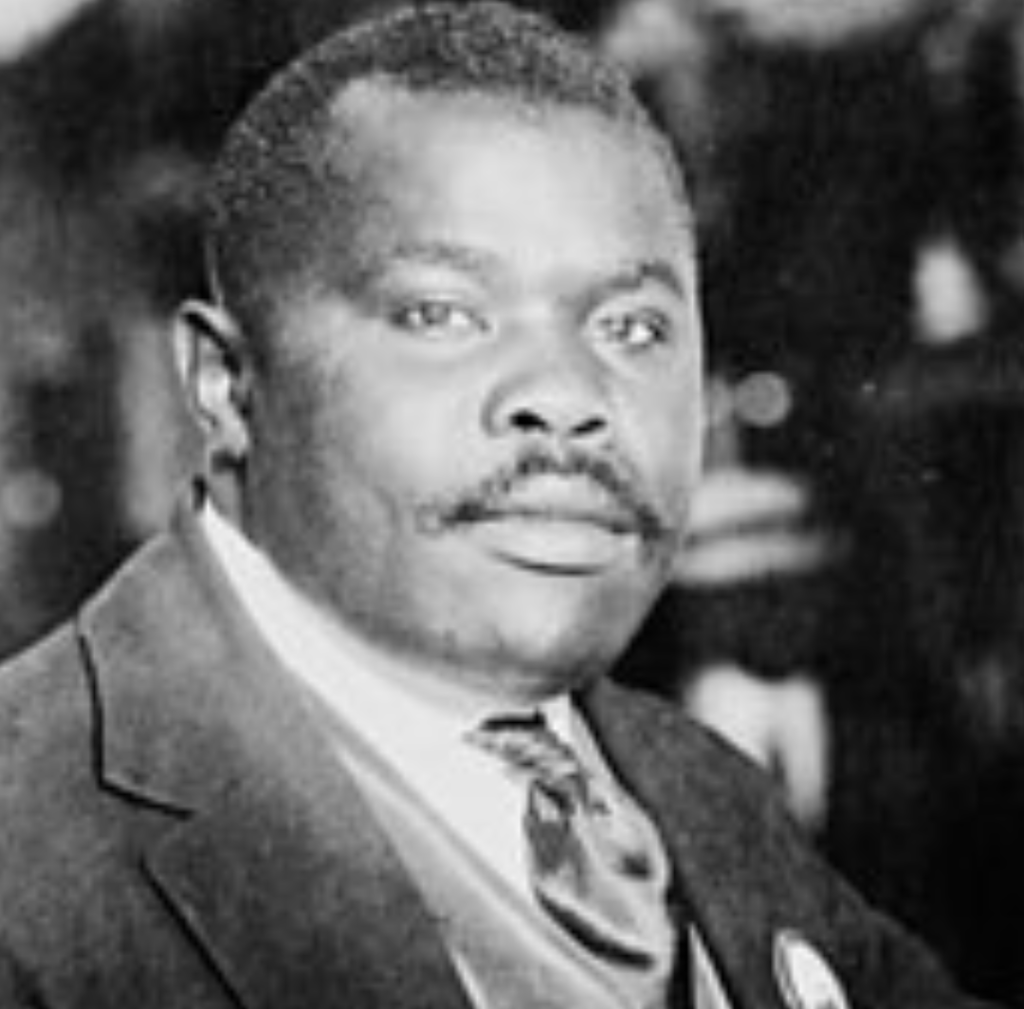
The Architect of Global Sovereignty: Marcus Garvey and the UNIA
In the early 20th century, as people of African descent faced rampant discrimination, Jim Crow laws, and a global colonial system, a powerful and unifying voice emerged. Marcus Mosiah Garvey did not just seek to reform the systems of his day. He sought to build entirely new ones.
In 1914, Garvey founded the Universal Negro Improvement Association and African Communities League in Jamaica. He eventually established its global headquarters in Harlem, New York. It quickly became the largest mass movement in the history of the African diaspora. At its height, the UNIA claimed a membership of over 4 million people across 40 countries. The movement was centered on the revolutionary ideas of Global Sovereignty, Pan-Africanism, and total economic self reliance.
One God! One Aim! One Destiny!
Garvey's philosophy was a direct call to action for the entire African diaspora. His central slogan was "Africa for the Africans, at home and abroad." The UNIA went far beyond the scope of traditional civil rights. While other organizations focused on integration or legal petitions, Garvey focused on complete economic, political, and cultural autonomy.
To achieve this vision, the UNIA created a vast and multi faceted ecosystem that functioned like a nation within nations.
The Pillars of the Garveyite Ecosystem
The movement was built on three essential foundations that remain blueprints for empowerment today:
Economic Independence: The most famous venture was the Black Star Line. This was a steamship corporation intended to facilitate global trade among Black communities and transport voluntary emigrants to Africa. To support local needs, the UNIA launched the Negro Factories Corporation. This entity managed grocery stores, restaurants, laundries, and a printing press. The goal was to create jobs and ensure that wealth circulated multiple times within the community before leaving.
Cultural Pride and Identity: Garvey championed the Red, Black, and Green Flag in 1920 as the official banner of the African race. This was a move to promote self love, dignity, and a shared heritage. It provided a visual identity for a people whose history had been intentionally obscured by colonialism.
Global Institutional Unity: The UNIA established over 700 branches across the United States, the Caribbean, and Central America. They articulated their demands in the powerful "Declaration of the Rights of the Negro Peoples of the World" during a massive convention at Madison Square Garden.
The Black Star Line and the Cost of Ambition
The ambition of the UNIA was breathtaking, but their business ventures were ultimately plagued by immense pressure. While mismanagement played a role, the movement was also the target of intense sabotage by government agencies. J. Edgar Hoover and the Bureau of Investigation specifically targeted Garvey, viewing the UNIA as a threat to the established social order. Garvey's 1927 deportation back to Jamaica dealt a final blow to the movement's momentum in the United States.
However, the impact of Garveyism transcended its organizational challenges. According to historical records, the UNIA was the first movement to successfully organize millions of Black people across the Atlantic. It instilled a sense of racial pride and an entrepreneurial spirit that inspired generations of subsequent leaders, including Malcolm X, whose parents were active Garveyite organizers.
The UNIA in the Digital Age: A 2026 Relaunch
Today, the idea of a self sufficient and global Black economy feels more relevant than ever. With a global Black population estimated at approximately 1.2 billion people, the potential for coordination is unprecedented. In an era of targeted digital communities and global commerce, we must ask what a modern version of Garvey’s vision would look like.
A modern "Black Star Line" might not be made of steel and steam. Instead, it could manifest as a global e-commerce and logistics network. It could take the form of a Pan-African digital currency or a venture capital fund dedicated exclusively to Black owned businesses across the diaspora.
Furthermore, the potential reach of a global digital platform today is far greater than anything Garvey could have imagined. If Garvey could reach 4 million people using only newspapers and telegrams, a unified political voice today could leverage the internet to organize hundreds of millions toward shared policy goals.
The Path to 2026 and Beyond
Does the core principle of "Africa for the Africans" still resonate as the ultimate path to liberation? In our diverse and interconnected world, this likely requires a new interpretation. It is less about physical relocation and more about the "sovereignty of the mind" and the "ownership of the system."
If a 2026 version of the UNIA were to rise, its most powerful force would likely be its ability to coordinate capital and data across borders. True liberation in the modern age requires the construction of an architecture that no single government can dismantle.
Recommended Reading List
To understand the full scope of Garvey’s impact and the mechanics of his movement, consider these foundational texts:
The Philosophy and Opinions of Marcus Garvey edited by Amy Jacques Garvey: A collection of his speeches and writings that outline the core of his ideology.
Race First by Tony Martin: An exhaustive look at the UNIA's organizational structure and its global influence.
Marcus Garvey, Hero by John Henrik Clarke: A biographical perspective that places Garvey within the larger context of African history.
Negro with a Hat by Colin Grant: A modern biography that provides a detailed narrative of his life, his successes, and his eventual exile.
Community Discussion (The Bantaba)
How does Garvey’s focus on "Economic Sovereignty" differ from modern corporate diversity and inclusion initiatives?
If the Black Star Line were founded today as a digital entity, what would be its primary "product" or "service" to the diaspora?
In what ways did the "Declaration of the Rights of the Negro Peoples of the World" set the stage for later human rights movements?
How can modern communities protect their institutions from the kind of external sabotage that the UNIA faced in the 1920s?
Which of the eight pillars of sovereignty—Economic, Educational, or Political—do you believe is the most urgent for the current generation to master?
THE BLUEPRINT
Building the future of the global African Diaspora through data-driven storytelling and the Eight Pillars of Sovereignty. From survival to ownership.
Contact
Subscribe To the NewsLETTER
hello@blackmetrics.space
Copyright © 2026 The Black Metrics. All Rights Reserved.
The BlaCK METRICS