Henry Sylvester Williams and the Origins of Pan-Africanism
This Strategic Briefing uncovers the overlooked origins of organized Pan-Africanism by highlighting the foundational role of Henry Sylvester Williams. Long before figures like W. E. B. Du Bois and Marcus Garvey rose to prominence, Williams, born in Trinidad, recognized that the struggles of African descended people were part of a global system rooted in colonialism. The article explains how he founded the African Association in 1897, widely recognized as the first formal Pan-African organization, and organized the 1900 Pan-African Conference in London, laying the structural foundation for global Black political unity. It also explores why his contributions were later minimized in mainstream history. At its core, the post reclaims Williams’ legacy, arguing that Pan-Africanism was not spontaneous or accidental. It was strategically organized, Caribbean led, and globally envisioned from the very beginning.
PAN AFRICAN HISTORY
The Black Metrics
12/20/20253 min read
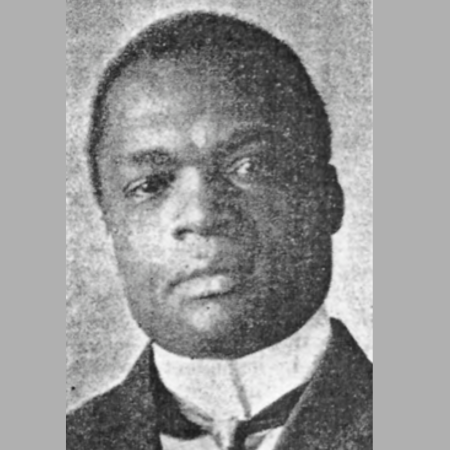
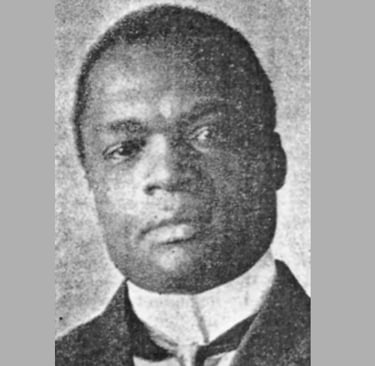
The Architect of Global Coordination: Henry Sylvester Williams and the Caribbean Origins of Unity
When people hear the term Pan-Africanism, a few familiar names usually come up, such as W.E.B. Du Bois, Marcus Garvey, and Malcolm X. What is far less known is that the first organized effort for Global Coordination was founded by a Black Caribbean man from Trinidad, decades before most of those figures rose to prominence.
His name was Henry Sylvester Williams. Without his tireless work, Pan-Africanism as we know it might never have taken an organized, institutional form.
Born in Trinidad, Thinking Globally
Henry Sylvester Williams was born in 1869 in Arouca, Trinidad, which was then a British colony. Growing up under colonial rule, he witnessed how people of African descent were politically marginalized and economically exploited. These conditions were visible not only in the Caribbean but across the entire African diaspora.
Unlike many activists of his time, Williams recognized early on that these struggles were not isolated. He understood them as part of a global system of racial domination rooted in colonialism and empire. This awareness led him to move to London in the 1890s to study law. There, he realized that London was the heart of the empire and, therefore, the perfect place to organize a challenge against it.
The First African Association
In 1897, while still a student, Williams founded the African Association. Historians widely recognize this as the first formal body dedicated to Global Coordination among people of African descent. Its mission was bold. The African Association sought to unite people across national borders to challenge colonial rule and advocate for self determination.
At a moment when the Scramble for Africa was in full swing and European powers were carving up the continent, Williams was building a political infrastructure. He was not just protesting. He was creating a network that could lobby the British Parliament and influence international law.
The 1900 Conference: A Turning Point in History
Williams’ most historic achievement came in July 1900, when he organized the First Pan-African Conference at Westminster Town Hall in London. This was a monumental undertaking. Delegates attended from Africa, the Caribbean, the United States, and Europe.
The conference addressed three critical areas:
Colonial Exploitation: Calling out the theft of African land and resources.
Legal Inequality: Demanding that Black people throughout the British Empire be treated as full citizens.
Political Representation: Asserting the right of African people to govern themselves.
One of the attendees was a young W.E.B. Du Bois, who was then a professor at Atlanta University. It was at this conference that Du Bois famously drafted the Address to the Nations of the World, which contained the prophetic line that the problem of the twentieth century is the problem of the color line. Du Bois later acknowledged that it was Williams who initiated the movement.
Why Was He Erased?
Despite his foundational role, Williams is rarely mentioned in mainstream history. This absence is partially due to his early death in 1911 at age 42. He passed away before the movement gained the mass media attention of the 1920s. Furthermore, the narrative of Black liberation has often been centered in the United States, causing many to overlook the Caribbean intellectuals who provided the initial blueprints.
At the time of the 1900 conference, there were roughly 10 million people of African descent in the United States and millions more across the Caribbean and Africa living under colonial rule. Williams was trying to organize this entire global population before the age of radio or commercial flight.
His Legacy Lives On
Everything Pan-Africanism represents today, including global solidarity and resistance to systems of oppression, traces back to the vision Williams articulated. He was the first to prove that Black people from different nations could meet, organize, and speak with a single, unified voice to the world's most powerful empires.
Remembering Henry Sylvester Williams is about reclaiming Caribbean leadership in global struggles. Pan-Africanism was never accidental. It was strategic, deliberate, and Caribbean led from the start.
Suggested Reading List
Henry Sylvester Williams: The Founder of the Pan-African Movement by Owen Charles Mathurin: The most comprehensive biography of Williams, detailing his legal career and his organizing in London and South Africa.
The Pan-African Connection by Tony Martin: A deep dive into the Caribbean roots of global Black movements.
The World of W.E.B. Du Bois by Edward J. Blum: Provides context on the 1900 conference from the perspective of its most famous attendee.
Pan-Africanism: A History by Hakim Adi: A modern historical overview that places Williams at the beginning of the global timeline.
Community Discussion (The Bantaba)
Henry Sylvester Williams chose London, the center of the British Empire, as his headquarters. Why was this a strategic move for a movement focused on Global Coordination?
How does knowing that Pan-Africanism started with a Trinidadian lawyer change your understanding of the movement's history?
The 1900 conference occurred while the Scramble for Africa was still happening. What kind of courage did it take for delegates to challenge the world's superpowers at that time?
Williams died young and was nearly forgotten by history. What can modern movements do to ensure their founders and their original goals are not erased or distorted over time?
Looking at the three pillars of the 1900 conference (Colonialism, Legal Equality, and Representation), which do you think is the most pressing issue for the diaspora in 2026?
THE BLUEPRINT
Building the future of the global African Diaspora through data-driven storytelling and the Eight Pillars of Sovereignty. From survival to ownership.
Contact
Subscribe To the NewsLETTER
hello@blackmetrics.space
Copyright © 2026 The Black Metrics. All Rights Reserved.
The BlaCK METRICS