Henry Sylvester Williams: The Trinidadian Lawyer Who Founded Pan-Africanism and Changed Global History
Before Marcus Garvey, before Du Bois's fame, a Trinidadian lawyer named Henry Sylvester Williams organized the first Pan-African Conference in London in 1900. This is the full story of the man who built the blueprint — and why history nearly erased him.
PAN AFRICAN HISTORY
The Black Metrics
12/20/202510 min read
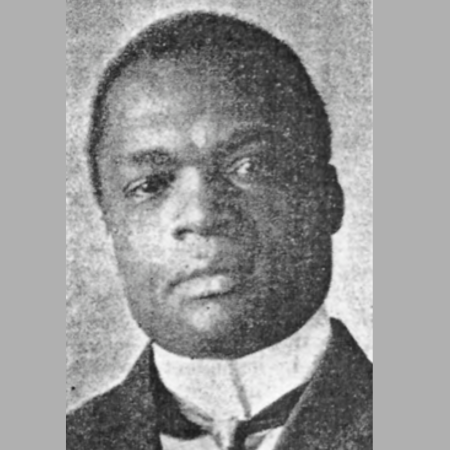
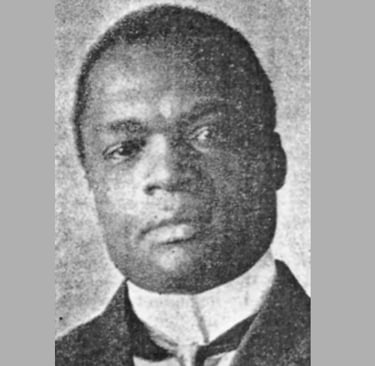
Henry Sylvester Williams: The Trinidadian Lawyer Who Founded Pan-Africanism and Changed Global History
Most people, if they know anything about the origins of Pan-Africanism, place its beginning somewhere in the 1920s with Marcus Garvey's Universal Negro Improvement Association, or perhaps slightly earlier with W.E.B. Du Bois's prolific writing and conference organizing. This version of the story is not false. But it is incomplete in a way that matters enormously, because it erases the man who actually laid the first institutional foundations of the movement — a Trinidadian lawyer named Henry Sylvester Williams who, working out of London at the turn of the 20th century, did something that had never been done before: he organized the scattered African diaspora into a single, coordinated political voice.
Williams did not simply inspire. He built. He created the legal and organizational infrastructure through which Pan-African demands could be brought before the most powerful institutions on Earth. He held the first international conference of African-descended people at the precise moment when European powers were finalizing the carve-up of the African continent. He did all of this before the age of commercial aviation, before radio broadcasting, before anything resembling modern communications technology — working with letters, personal networks, and an extraordinary understanding of where political power actually resided.
That he is not a household name is not an accident of history. It is a consequence of the same patterns of erasure and marginalization that Pan-Africanism itself was organized to resist.
The World Williams Was Born Into
To understand what Williams accomplished, you have to understand the world he was born into in 1869 in Arouca, Trinidad.
Trinidad was a British colony. Its economy had been built on the labor of enslaved Africans, and although formal slavery had been abolished in the British Empire in 1833, the structures it had created — economic dependence, political marginalization, social hierarchies tied to race — remained thoroughly intact. The people of African descent who made up the majority of Trinidad's population had legal freedom but not political power, nominal citizenship but not genuine self-determination.
This was not unique to Trinidad. It was the condition of African-descended people across the entire British Empire and, with local variations, across every corner of the globe where the Atlantic slave trade and European colonialism had extended their reach. In the United States, Reconstruction had collapsed into Jim Crow. In West Africa, the Scramble for Africa was parceling out the continent to European powers at a pace that would see over 90 percent of African territory under colonial control by 1914. In the Caribbean, colonial administration controlled land, commerce, and legal institutions with no meaningful accountability to the Black majority populations it governed.
Williams grew up seeing this pattern clearly. He recognized, with a precocious analytical clarity, that the condition of African-descended people in Trinidad was not a local aberration. It was a global system. And he drew a conclusion from this that most of his contemporaries had not yet reached: the response to a global system had to be a global response.
This is what set Williams apart from the beginning. He was not simply angry about conditions in Trinidad. He was thinking globally before the concept had a name.
London as the Center of Strategic Resistance
In the 1890s, Williams made a decision that seems counterintuitive until you understand its logic: he moved to London. The capital of the empire that was responsible for much of what he was organizing against.
He studied law at Gray's Inn, one of the Inns of Court that trained barristers for the British legal system. And while he was there, he did what great organizers do: he looked at the landscape, identified where power was concentrated, and decided that was where the challenge to power had to be mounted.
London in the 1890s was the political and financial capital of the most powerful empire in human history. Parliamentary decisions made in London determined the governance of territories across Africa, Asia, the Caribbean, and the Pacific. International legal frameworks were being debated and developed in London. The newspapers that shaped elite opinion across the English-speaking world were published in London. If you wanted to change the policies that governed the lives of African people across the globe, London was not just a convenient location. It was the necessary one.
Williams understood something that the full tradition of Pan-African strategic thought would keep returning to: you cannot resist power effectively from the periphery. You have to engage it where it actually operates. Working from Trinidad or Jamaica or West Africa, he could agitate locally. Working from London, he could potentially influence the entire imperial system.
This strategic insight — that the center of the empire was also the most effective location from which to challenge it — animated everything Williams built in the years that followed.
The African Association: The First Institution
In 1897, while still completing his legal studies, Williams founded the African Association. Historians now widely recognize this as the first formal organization in history dedicated to coordinating political action among people of African descent across national boundaries.
The African Association's founding purpose was explicit and ambitious. It sought to bring together Africans and African-descended people from different nations and different colonial contexts to pursue three interconnected goals: advocating against colonial exploitation, lobbying for legal equality across the British Empire, and building the kind of cross-border networks that could sustain coordinated political pressure over time.
The founding of the African Association at this particular moment was significant in ways that are easy to miss with historical hindsight. The Scramble for Africa was entering its final phases. The Berlin Conference of 1884–85 had established the framework through which European powers formalized their territorial claims, and by 1897 those claims were being consolidated into full colonial administration. The international community — such as it was — had essentially ratified the right of European nations to govern African territories as they saw fit.
Williams was building a political infrastructure at precisely the moment when that infrastructure was most needed and most dangerous to build. The African Association was not simply a gathering of like-minded people. It was an attempt to create a counter-institution — a body that could engage with the British Parliament, generate legal arguments, and represent the interests of African-descended people in the same arenas where decisions about their lives were being made.
This is what Martin Robison Delany had theorized was necessary decades earlier: not simply protest, but the construction of independent political power. Williams was turning theory into institution.
The 1900 Conference: A Turning Point in World History
Everything Williams had built with the African Association was prologue to what happened in July 1900 at Westminster Town Hall in London: the First Pan-African Conference.
The conference was, by any measure, a remarkable achievement of logistics and political will. Williams had no significant institutional backing. He had no wealthy patrons underwriting the operation. He had no government support. What he had was a network he had spent years building through the African Association, a clear vision of what needed to happen, and the organizational determination to make it happen.
Delegates traveled from West Africa, from the Caribbean, from the United States, and from across Europe. They came at considerable personal expense, in an era when transatlantic travel was slow, expensive, and uncomfortable. They came because Williams had persuaded them that a gathering of this kind — the first of its kind in history — was important enough to justify the sacrifice.
The conference addressed three interlocking areas of concern.
The first was colonial exploitation: the systematic theft of African land and natural resources by European powers, conducted under legal frameworks that gave Africans no standing to challenge or resist it. The delegates called this what it was — theft — at a moment when the political consensus in Europe treated it as the natural order of things.
The second was legal inequality: the condition of Black people across the British Empire who held nominal citizenship but were denied the legal protections and political rights that citizenship was supposed to guarantee. This was not, the conference argued, an implementation failure. It was a structural feature of a system designed to maintain racial hierarchy.
The third was political representation: the assertion that African people had the right to govern themselves, not merely to be governed by others who claimed to act in their interests. This was a radical position in 1900, at a moment when the dominant political philosophy of empire held that colonized peoples were not yet ready for self-governance and required European tutelage.
Among the conference's attendees was a young professor from Atlanta University named W.E.B. Du Bois. It was at this conference that Du Bois drafted the Address to the Nations of the World — the document that contained his famous declaration that the problem of the twentieth century is the problem of the color line. Du Bois would go on to become the most famous intellectual in Pan-African history. He would later acknowledge that it was Williams who initiated the movement and that his own work stood on Williams's foundation.
This is not a minor footnote. It is a direct lineage. The intellectual tradition that produced some of the most important political thought of the 20th century traces its institutional origins to a Trinidadian lawyer who most people have never heard of.
The South Africa Chapter: Carrying the Blueprint to the Continent
After the 1900 conference, Williams continued his legal career and his organizing work simultaneously. In 1903, he traveled to South Africa — then still under British colonial authority — to practice law and extend his political network.
In South Africa, Williams worked as a defense attorney, taking cases that gave him a direct view into the legal mechanisms of racial domination. He represented Black South Africans in courts where the law was explicitly designed to protect white property and white authority at the expense of Black life and Black rights. He saw at ground level what colonial legal systems actually did to the people they governed.
He also continued to organize. He established connections with South African political figures who were beginning to build what would eventually become the African National Congress. His presence in South Africa was not simply professional. It was an extension of the same Pan-African project he had been building in London — the effort to connect the struggles of African-descended people across different colonial contexts and build a network that could coordinate their demands.
The South Africa chapter of Williams's life is rarely discussed even in accounts that mention him at all. But it represents something important: the practical attempt to carry the Pan-African blueprint beyond the diaspora and into direct engagement with the African continent itself. Williams was not content to theorize about African unity from a distance. He went to Africa, worked in its legal system, and tried to build the connections that would make coordination real.
Why History Buried Him
Williams died in 1911 at the age of 42. He died before the mass Pan-African movements of the 1920s achieved the visibility that would have attached his name permanently to the story. He died before the UNIA, before the Harlem Renaissance, before the independent African nations that would eventually make Pan-Africanism a geopolitical reality. His death came too early for him to consolidate the movement he had founded, and too early for the broader public to connect the dots between his foundational work and the developments that followed.
The erasure of Williams from the mainstream Pan-African narrative also reflects a larger pattern: the centering of African American experience in histories of Black liberation. Williams was a Caribbean man working in London. His organizing base was not Harlem or Atlanta or Chicago. His primary audience was the British Parliament and international legal forums, not the Black American church or the American press. He operated in a register that the dominant narrative of Black history — which has been heavily shaped by African American intellectual and cultural institutions — has consistently struggled to fully incorporate.
This is precisely the kind of erasure that diaspora wars accelerate and coordinate resistance can correct. When African Americans and Caribbeans compete over who owns the story of Black liberation, both communities lose access to the full history. When Henry Sylvester Williams is treated as peripheral because he was Trinidadian and worked in London rather than New York, a foundational chapter of the shared history disappears.
Reclaiming Williams is not only about giving credit where it is due, though that matters. It is about recovering the full strategic record — understanding that Pan-Africanism was, from its very first institutional expression, a Caribbean-led, London-based, globally oriented movement. That geography is not incidental. It is part of the blueprint.
The Continuing Relevance of Williams's Method
What made Williams distinctive as an organizer was not simply his vision, which he shared in various forms with many of his contemporaries. It was his method. He understood that vision without infrastructure was aspiration. And he built infrastructure.
He did not simply write pamphlets arguing that Black people should be free. He founded an organization. He built a network. He organized a conference. He engaged with legal systems, parliamentary processes, and international forums — the actual mechanisms through which power operated. He understood that moral arguments, however correct, were insufficient to move systems that had material interests in their own continuation. What moved systems was organized, coordinated, sustained political pressure brought to bear at the points where decisions were actually made.
This is as true in 2026 as it was in 1900. The full sovereignty framework that Pan-African thinkers developed across the 20th century builds directly on the method Williams pioneered: not protest alone, but institution building; not rhetoric alone, but coordination; not the assertion of rights alone, but the construction of the power necessary to make those rights real.
Williams built the first brick. The building is still under construction.
Suggested Reading List
Henry Sylvester Williams: The Founder of the Pan-African Movement by Owen Charles Mathurin: The most comprehensive biography of Williams, detailing his legal career and his organizing in London and South Africa.
The Pan-African Connection by Tony Martin: A deep dive into the Caribbean roots of global Black movements.
The World of W.E.B. Du Bois by Edward J. Blum: Provides context on the 1900 conference from the perspective of its most famous attendee.
Pan-Africanism: A History by Hakim Adi: A modern historical overview that places Williams at the beginning of the global timeline.
Community Discussion (The Bantaba)
Henry Sylvester Williams chose London, the center of the British Empire, as his headquarters. Why was this a strategic move for a movement focused on Global Coordination?
How does knowing that Pan-Africanism started with a Trinidadian lawyer change your understanding of the movement's history?
The 1900 conference occurred while the Scramble for Africa was still happening. What kind of courage did it take for delegates to challenge the world's superpowers at that time?
Williams died young and was nearly forgotten by history. What can modern movements do to ensure their founders and their original goals are not erased or distorted over time?
Looking at the three pillars of the 1900 conference (Colonialism, Legal Equality, and Representation), which do you think is the most pressing issue for the diaspora in 2026?
Complete the series:
What Our Pan-African Ancestors Were Trying to Tell Us: Unity, Sovereignty, and the Blueprint Diaspora Wars Are Destroying
Martin Robison Delany: The Blueprint for Black Economic Self-Determination
THE BLUEPRINT
Contact
hello@blackmetrics.space
Copyright © 2026 The Black Metrics. All Rights Reserved.
The BlaCK METRICS
The Pillars
Strategic Stream Blog