Kwame Nkrumah: Architect of African Unity and the Enduring Dream of a United States of Africa
This Strategic Briefing explores the life and legacy of Kwame Nkrumah as a leading architect of modern Pan Africanism and a champion of continental unity. It highlights his belief that Ghana’s independence was only meaningful if it contributed to the total liberation and unification of Africa. The briefing examines his warning about neo colonialism, outlined in Neo-Colonialism: The Last Stage of Imperialism, and explains how he predicted economic control would replace direct colonial rule. It also traces his role in the formation of the Organization of African Unity and the evolution of that vision into today’s African Union. At its core, the briefing revisits Nkrumah’s bold proposal for a United States of Africa and invites readers to consider whether deeper political and economic integration could secure true sovereignty for the continent in the modern era.
POLITICAL SOVEREIGNTY | PAN-AFRICAN HISTORY
The Black Metrics
12/2/20254 min read
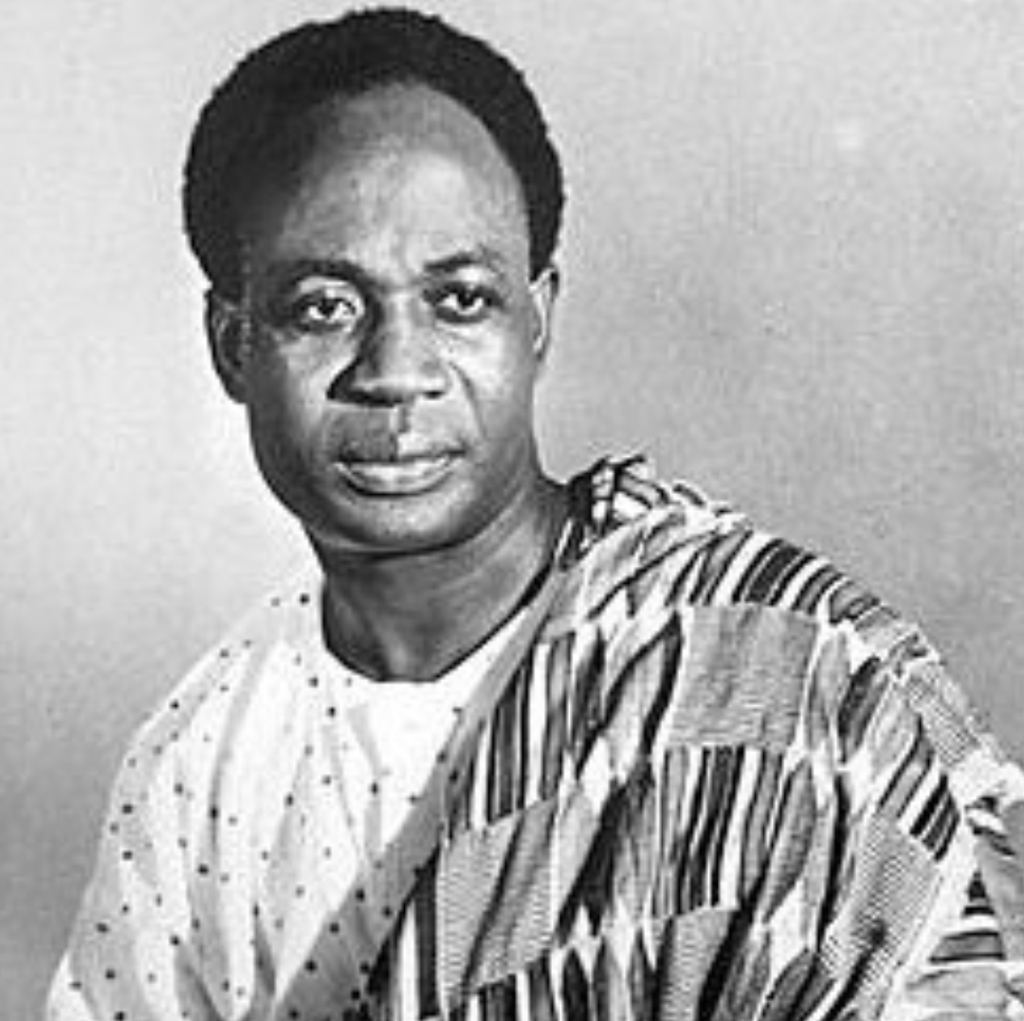
Kwame Nkrumah: Architect of African Unity and the Enduring Dream of a United States of Africa
Kwame Nkrumah, the visionary first leader of independent Ghana, remains an indelible figure in the history of global empowerment. More than just a liberator of his own nation, Nkrumah dedicated his life to a grander vision of a unified and prosperous Africa. His impassioned calls for solidarity and his incisive critique of external influence continue to resonate powerfully in our modern era.
The Clarion Call for Unity: "Africa Must Unite!"
Nkrumah famously declared that the independence of Ghana was meaningless unless it was linked up with the total liberation of the whole of Africa. This was the cornerstone of his political philosophy. He believed that newly independent states would remain vulnerable to manipulation unless they forged a common destiny.
His active role in the 1945 Fifth Pan-African Congress in Manchester solidified his commitment to liberation. Later, as head of state, Accra became a beacon for dialogue. He convened pivotal conferences in 1958 that brought together leaders and activists to lay the groundwork for a unified front. Nkrumah understood that the borders drawn at the Berlin Conference of 1884 were artificial lines meant to divide and conquer. To him, true sovereignty required erasing those lines in favor of a collective African identity.
Unmasking the New Chains: The Doctrine of Neo-Colonialism
Even as flags of independence were hoisted, Nkrumah foresaw a new form of subjugation. In his seminal work, Neo-Colonialism: The Last Stage of Imperialism, he detailed how former colonial powers could maintain control through economic rather than direct political means.
Nkrumah argued that the essence of neo-colonialism is that a state appears independent on the outside but its economic system is directed from the outside. This analysis remains remarkably pertinent. He warned against the subtle mechanisms of debt, trade imbalances, and foreign aid conditionalities that could undermine true agency and perpetuate dependence. Understanding these economic levers is crucial for grasping the ongoing challenges faced by many nations as they navigate global markets.
The Economic Blueprint for a Federated Continent
Nkrumah did not just want a political union. He wanted an economic powerhouse. He proposed a unified African common market and a central bank to manage a continental currency. At the time, his critics called this radical, but today, we see the echoes of his vision in the African Continental Free Trade Area (AfCFTA).
According to data from the World Bank, the AfCFTA has the potential to lift 30 million people out of extreme poverty and increase Africa’s income by $450 billion by 2035. Nkrumah’s foresight regarding the necessity of an internal market is now a central pillar of African development strategy. He knew that as long as African nations traded more with Europe than with each other, they would remain economically fragile.
From the OAU to the African Union
Nkrumah was a driving force behind the creation of the Organization of African Unity in 1963. While the OAU adopted a more cautious approach than Nkrumah’s call for an immediate federal government, it was a vital step. Today, the African Union (AU), established in 2002, has deepened this agenda. It aims to accelerate socio-economic integration and promote peace and security. While progress has been made, the full realization of a truly unified and sovereign Africa remains an ongoing pursuit for the next generation.
The Audacious Dream: A United States of Africa in 2026
Imagine a United States of Africa today with a single currency stabilizing economies and facilitating seamless trade. Visualize a continent with its own central bank funding African priorities rather than relying on external lenders. This vision includes:
Unified Patents: Protecting African innovation and intellectual property on a global scale.
Open Borders: Allowing the free movement of 1.4 billion people to share skills and resources.
Collective Defense: A unified military ensuring peace without the need for foreign intervention.
Right of Return: A clear pathway for the African diaspora to contribute their capital and expertise based on shared heritage.
Given the current geopolitical landscape and the diverse realities of the continent, the question is no longer if such a union is necessary, but how quickly it can be executed.
Recommended Reading List
To fully grasp the depth of Nkrumah's strategy, these works provide essential context:
Africa Must Unite by Kwame Nkrumah: The primary text outlining his case for a federal government for the entire continent.
Neo-Colonialism: The Last Stage of Imperialism by Kwame Nkrumah: A detailed look at the economic forces that continue to shape global power dynamics.
Kwame Nkrumah: The Father of African Nationalism by David Birmingham: A comprehensive biography that explores his life from his student days to his years in power.
The State of Africa by Martin Meredith: Provides historical context on the era of independence and the challenges faced by Nkrumah and his contemporaries.
Community Discussion (The Bantaba)
Nkrumah argued that individual African states are too small to be truly sovereign in a global economy. Do you believe this holds true in the digital age?
How does the concept of neo-colonialism apply to modern issues like "digital colonialism" or foreign control of data and infrastructure?
What are the biggest psychological hurdles to achieving a United States of Africa, and how can they be overcome?
If a single African currency were launched in 2026, what impact would it have on the global financial system?
Nkrumah wanted the diaspora to have a direct role in the continent's development. What is the most effective way for the diaspora to contribute to African sovereignty today?
THE BLUEPRINT
Building the future of the global African Diaspora through data-driven storytelling and the Eight Pillars of Sovereignty. From survival to ownership.
Contact
Subscribe To the NewsLETTER
hello@blackmetrics.space
Copyright © 2026 The Black Metrics. All Rights Reserved.
The BlaCK METRICS