Kwame Nkrumah: The Architect of African Unity and the Blueprint for a United States of Africa That the World Still Needs
Kwame Nkrumah led Ghana to independence, warned the world about neo-colonialism, and spent his life designing a blueprint for a unified Africa. Decades later, his analysis is more relevant than ever — and his blueprint is still unfinished.
POLITICAL SOVEREIGNTY | PAN-AFRICAN HISTORY
The Black Metrics
12/2/202512 min read
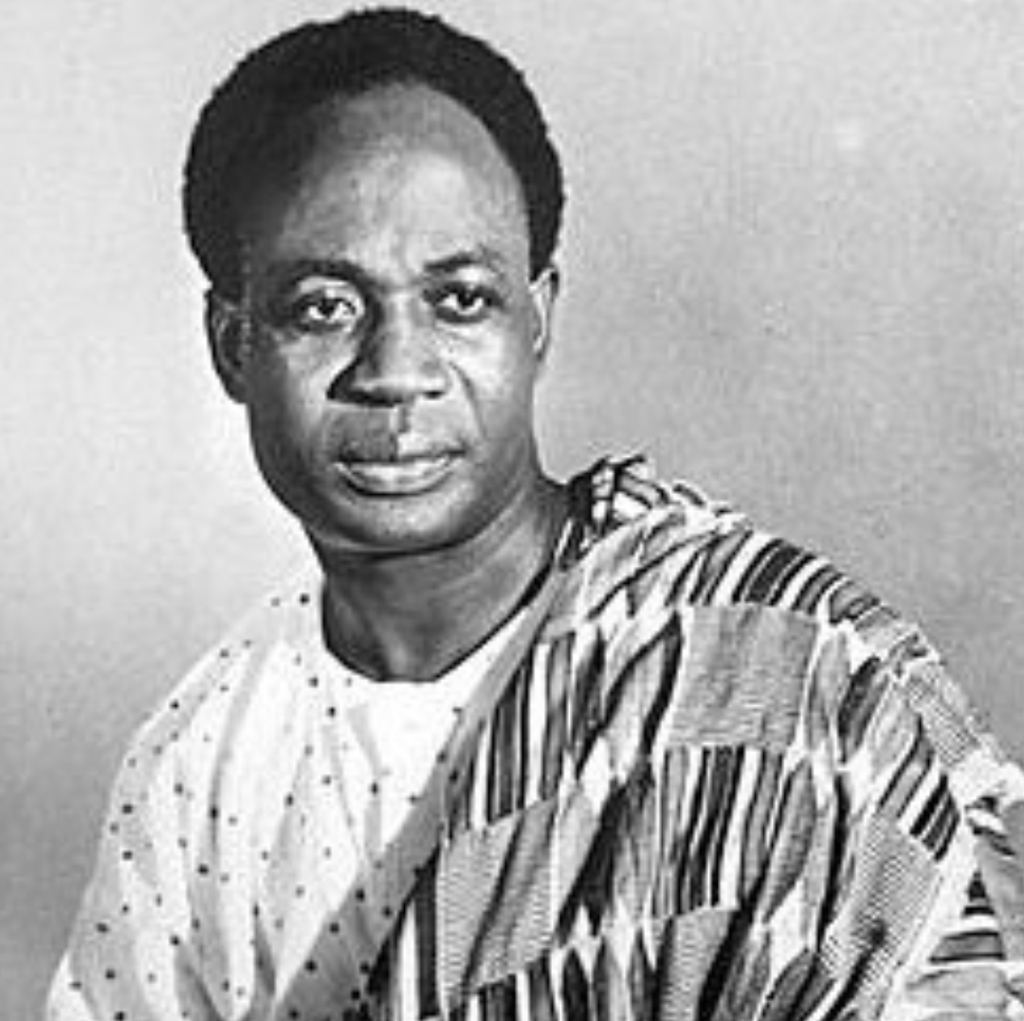
Kwame Nkrumah: The Architect of African Unity and the Blueprint for a United States of Africa That the World Still Needs
There is a particular kind of political vision that gets dismissed as utopian in its own time and then quietly absorbed into mainstream consensus over the following decades, repackaged without attribution as pragmatic policy. Kwame Nkrumah experienced this fate more thoroughly than almost any other political thinker of the 20th century.
In the 1950s and 1960s, Nkrumah's argument that African nations needed to unite into a continental political and economic federation — a United States of Africa — was treated by Western governments, by many of his fellow African heads of state, and by the international press as the romantic overreach of an idealist who did not understand the realities of power. His critique of neo-colonialism — the argument that formal political independence meant nothing if economic control remained in the hands of former colonial powers — was dismissed as Marxist paranoia, Cold War positioning, and anti-Western sentiment dressed up as political theory.
Today, the African Continental Free Trade Area is attempting to build the integrated economic space Nkrumah spent his political life advocating for. The African Union is grappling with the same questions of sovereignty and coordinated governance that he was the first African head of state to articulate with systematic force. And the debt traps, trade imbalances, and conditional aid arrangements that he called neo-colonialism are now discussed, in mainstream international development circles, as exactly the structural mechanisms of economic subjugation he described.
Nkrumah was not wrong. He was early. And the gap between being early and being heard is, for certain kinds of political vision, measured in generations.
The Formation of a Pan-African Mind
Kwame Nkrumah was born in 1909 in Nkroful, in what was then the Gold Coast — a British colonial territory on the West African coast. He grew up in a society where the colonial administration governed every significant aspect of public life: the economy, the education system, the legal framework, and the political institutions through which decisions about African people's lives were made by people who were not African.
His early education at mission schools gave him the academic foundation to pursue further study, and in 1935 he left the Gold Coast for the United States, where he studied at Lincoln University in Pennsylvania — a historically Black university — and later at the University of Pennsylvania, where he earned graduate degrees in education and philosophy. The decade he spent in the United States was not simply an academic exercise. It was an immersion in the full intellectual and political landscape of Black American thought during one of its richest periods.
At Lincoln and in Philadelphia, Nkrumah encountered the ideas of W.E.B. Du Bois, whose analysis of the global color line and whose concept of Pan-Africanism as a coordinated international strategy had been developing for decades. He encountered the lingering influence of Marcus Garvey's mass mobilization model, which had demonstrated that millions of African-descended people across the globe could be organized around a shared political vision. He read Martin Robison Delany's arguments about Black sovereignty and independent institutions. He absorbed the full tradition of Pan-African thought that had been building since the late 19th century and emerged from the American period with both a comprehensive intellectual framework and a burning urgency to put it into practice.
When he moved to London in 1945 to study law, he carried that framework into the center of the most consequential political event in Pan-African history up to that point: the Fifth Pan-African Congress in Manchester.
Manchester 1945: The Congress That Changed Everything
The Fifth Pan-African Congress, held in Manchester in October 1945, was a gathering of remarkable historical significance that is not nearly as well known as it deserves to be. The participants included Nkrumah, who served as a key organizer; Du Bois, who attended as the elder statesman of the movement; Jomo Kenyatta, who would lead Kenya to independence; and a range of trade unionists, journalists, students, and political organizers from across Africa, the Caribbean, and the Black diaspora in Britain.
What distinguished Manchester 1945 from earlier Pan-African congresses was the explicitness and urgency of its demands. Previous congresses had petitioned for reform, for better treatment within colonial frameworks, for gradual expansion of political rights. Manchester 1945 demanded independence. Not reform. Not gradual progress. Not better colonial administration. The end of colonial rule, across the entire African continent, as a matter of immediate political necessity.
The conference's resolutions were drafted with Nkrumah's direct involvement and articulated a vision of African liberation that was simultaneously political, economic, and cultural. Political independence was necessary but insufficient on its own. Economic independence — African control of African resources and African economic institutions — was equally essential. And cultural independence — the recovery and assertion of African identity on African terms, not the terms imposed by colonial education systems — was the foundation on which both political and economic independence had to be built.
Nkrumah returned from Manchester to the Gold Coast in 1947 as the organizer of the United Gold Coast Convention and quickly emerged as the most dynamic political figure in the independence movement. His capacity to connect intellectual argument to mass mobilization — to translate the sophisticated political philosophy of Pan-African thought into the language of everyday Ghanaian life — distinguished him from the more cautious leadership of the UGCC and eventually led to the founding of his own Convention People's Party in 1949.
Independence Day and the Weight of Its Meaning
On March 6, 1957, Ghana became the first sub-Saharan African country to achieve independence from colonial rule. The significance of this moment extended far beyond Ghana's borders. It was the first proof of concept that African independence was not only possible but achievable through organized political action, and it sent a signal to independence movements across the continent that the colonial era could be ended.
Nkrumah understood the symbolic weight of what had happened and immediately attempted to load it with strategic content. In his independence speech, he made a declaration that became one of the most cited statements in Pan-African history: the independence of Ghana was meaningless unless it was linked up with the total liberation of the whole of Africa.
This was not a rhetorical flourish. It was a strategic position, and it was a controversial one. Many of his fellow African leaders who were working toward independence in their own territories were cautious about statements that linked their national projects to a continental vision they were not sure they shared. The question of whether African unity should precede full independence or follow it, whether a continental federation was possible at all given the diversity of African political realities, and whether Nkrumah's vision was a practical blueprint or an ideological aspiration was debated among African independence leaders with considerable intensity.
Nkrumah's answer to these debates was always the same: the question of African unity was not optional. It was the only framework within which African independence could be made real and permanent. An Africa of fifty-plus individual nations, each separately navigating relationships with far more powerful former colonial powers and with the major blocs of the Cold War, was an Africa that would reproduce its colonial vulnerability in a different form. Only coordinated African power — economic, political, and military — could create the conditions for genuine sovereignty.
This was precisely the analysis that the full Pan-African tradition had been building toward: the recognition that identity without infrastructure was insufficient, and that sovereignty required not just the declaration of independence but the construction of the institutions through which independence could be defended and sustained.
Neo-Colonialism: The Diagnosis That Changed the Language of Development
Nkrumah's most intellectually significant contribution to political thought was his systematic analysis of neo-colonialism, developed most fully in his 1965 book Neo-Colonialism: The Last Stage of Imperialism. The title deliberately echoed Lenin's Imperialism: The Last Stage of Capitalism, and the intellectual ambition was comparable: to explain, in structural rather than moral terms, how a system of exploitation continued to operate even after its most visible mechanisms had been dismantled.
The argument was precise. Formal colonialism — the direct political control of African territories by European governments — had ended or was ending across the continent. But the economic relationships that colonialism had created had not ended. African nations that had achieved political independence still traded primarily with their former colonial powers. Their financial systems were still tied to European currencies and European banking institutions. Their infrastructure — roads, railways, ports — had been built to facilitate the extraction of raw materials to European markets and had not been redesigned to facilitate trade between African nations. Their educated professional classes had been trained in European universities and oriented toward European career paths and European professional networks.
The result, Nkrumah argued, was that political independence had not produced economic independence. African governments could pass laws, hold elections, appoint ministers, and make foreign policy. But the economic decisions that determined the material conditions of African life — the prices of commodities, the terms of debt, the conditions attached to foreign aid, the tariff structures governing trade — were still being made outside Africa by institutions that served non-African interests.
This was neo-colonialism: not the formal political control of colonial governance, but the continuing economic control of post-colonial dependency. A state that was formally sovereign but economically directed from outside was, in Nkrumah's framework, not genuinely sovereign at all.
The publication of Neo-Colonialism produced an immediate and aggressive response from the United States government, which withdrew a promised $25 million in aid to Ghana in direct retaliation. This response was itself a demonstration of the mechanisms Nkrumah was describing: the use of economic leverage to punish political independence of thought, not just of action.
The diaspora wars that fragment Black political energy today are, in Nkrumah's framework, one of the most effective contemporary expressions of neo-colonial logic. A diaspora that is organized around internal competition rather than coordinated economic and political action is a diaspora that cannot effectively challenge the structural mechanisms of exploitation that neo-colonialism sustains.
The Economic Blueprint: What Nkrumah Was Actually Proposing
Nkrumah's vision for African unity is often presented as primarily political — a call for a continental federation, a United States of Africa with its own government, currency, and military. This framing is not wrong, but it undersells the economic sophistication of what he was actually proposing.
His economic arguments were grounded in a structural analysis of how the global trading system worked and how African nations were positioned within it. African countries exported raw materials — minerals, agricultural commodities, oil — at prices set by global commodity markets they did not control. They imported manufactured goods — machinery, electronics, processed foods — at prices set by the industrial economies that produced them. The terms of this trade were consistently unfavorable to Africa: the commodity prices fluctuated downward while the prices of manufactured imports trended upward. The continent was exporting more and gaining less.
The solution Nkrumah proposed was not simply political union for its own sake. It was economic integration that would allow African nations to stop competing with each other for the same export markets and the same investment flows, and instead build the continental economic scale necessary to develop their own industrial capacity, set their own commodity prices through coordinated production policies, and trade with each other in ways that kept value within Africa.
He proposed a continental common market — the elimination of tariff barriers between African nations to facilitate intra-African trade. He proposed a continental currency — a shared monetary system that would reduce African nations' dependency on the dollar, the pound, and the franc and give the continent monetary policy tools proportional to its economic scale. He proposed a continental central bank that would finance African development priorities rather than channeling African savings into Western financial institutions.
These proposals were dismissed as radical in the 1960s. Today, the African Continental Free Trade Area — which the World Bank projects could lift tens of millions of people out of extreme poverty and significantly expand Africa's income within a decade — is an attempt to build the integrated economic space Nkrumah was describing. The AU's discussions of a continental currency and deeper monetary integration continue the same conversation.
The trajectory is toward Nkrumah. It has always been toward Nkrumah.
The OAU: Partial Victory and Permanent Tension
In 1963, Nkrumah achieved one of his most significant political goals when the Organization of African Unity was established in Addis Ababa. The OAU's founding was a landmark event — the first continental political institution in African history, a body through which African heads of state could coordinate positions on political, economic, and security issues.
But the OAU's founding also represented a defeat for the more ambitious version of Nkrumah's vision. The majority of African leaders who attended the founding conference rejected his proposal for an immediate continental government — a federal executive, a continental parliament, a unified military, and shared economic institutions. They preferred a looser framework of sovereign national states cooperating on matters of mutual interest while retaining full national independence.
The debate at Addis Ababa was intense and revealing. Nkrumah argued, with full force, that a continental body of sovereign states without supranational institutions was insufficient — that it reproduced the structural vulnerability of African nations without providing the concentrated power needed to address it. His opponents argued that the peoples of Africa had just achieved national independence and were not prepared to surrender it to a continental authority, however well-intentioned.
This was a genuine strategic disagreement, not simply a personality conflict, and the history of the decades that followed has not fully resolved it. The OAU's successor, the African Union, has deeper institutional structures than the OAU but still falls far short of the federal model Nkrumah proposed. The AfCFTA is a significant step toward economic integration but is not yet the continental common market he envisioned. The debate about how much sovereignty individual African nations should delegate to continental institutions in exchange for continental power is ongoing and unresolved.
Nkrumah's position in that debate — that the costs of insufficient integration are higher than the costs of sovereignty shared at continental scale — remains the most challenging and the most important contribution to it.
The Coup and Its Aftermath
In February 1966, while Nkrumah was traveling to Hanoi on a peace mission related to the Vietnam War, a military coup overthrew his government in Ghana. The coup had the active support of the CIA, which had been monitoring and attempting to destabilize his government for years. The response of the American and British governments to his removal was swift and warm: the new military junta was recognized immediately, and the economic and diplomatic isolation that Nkrumah's government had faced was lifted.
This was neo-colonialism operating in real time: the removal by external power of an African head of state whose primary offense was taking African sovereignty seriously enough to challenge the economic arrangements that made it fictional.
Nkrumah spent the rest of his life in Guinea, at the invitation of President Sékou Touré, writing and continuing to develop his political analysis. His post-coup books — Neo-Colonialism, Class Struggle in Africa, Handbook of Revolutionary Warfare — represent some of the most rigorous political thinking he produced, developed in exile, without the constraints and compromises of statecraft.
He died in Bucharest in 1972. He was 62 years old.
The United States of Africa in 2026: From Vision to Blueprint
The audacity of Nkrumah's continental vision has not diminished with time. If anything, the technological and economic developments of the past several decades have made the material preconditions for what he was proposing more achievable than at any point in his lifetime.
A continental currency, stabilizing the purchasing power of 1.4 billion people and reducing the exposure of African economies to the currency volatility that external debt and commodity dependence create. A continental central bank with the capacity to finance African infrastructure, African industrial development, and African research and innovation without the conditionalities that come with external funding. A unified patent system protecting the intellectual property of African innovators and ensuring that the creative and scientific output of the continent benefits African people rather than being captured by global systems that were built to extract value from Africa. A continental right of return giving the African diaspora a formal pathway to contribute their capital, their skills, and their institutional knowledge to the continent — establishing the connection between diaspora and continent that Du Bois, Garvey, and Nkrumah himself all identified as strategically essential.
These are not utopian proposals. They are the logical extension of what the AfCFTA, the AU, and the growing movement of pan-African economic thinkers and institution builders are already working toward. The question is not whether this direction is correct. The question is whether the political will to move in it with sufficient speed and ambition can be assembled before the window of possibility that the current technological and economic moment provides begins to close.
The full sovereignty framework that the Pan-African tradition has been developing for more than a century points consistently toward the same destination Nkrumah was pointing toward. The blueprint exists. The infrastructure is being built. The continent and its diaspora have the scale, the resources, and the talent that were always sufficient. What remains is the coordination that Nkrumah spent his life trying to build.
Recommended Reading List
To fully grasp the depth of Nkrumah's strategy, these works provide essential context:
Africa Must Unite by Kwame Nkrumah: The primary text outlining his case for a federal government for the entire continent.
Neo-Colonialism: The Last Stage of Imperialism by Kwame Nkrumah: A detailed look at the economic forces that continue to shape global power dynamics.
Kwame Nkrumah: The Father of African Nationalism by David Birmingham: A comprehensive biography that explores his life from his student days to his years in power.
The State of Africa by Martin Meredith: Provides historical context on the era of independence and the challenges faced by Nkrumah and his contemporaries.
Community Discussion (The Bantaba)
Nkrumah argued that individual African states are too small to be truly sovereign in a global economy. Do you believe this holds true in the digital age?
How does the concept of neo-colonialism apply to modern issues like "digital colonialism" or foreign control of data and infrastructure?
What are the biggest psychological hurdles to achieving a United States of Africa, and how can they be overcome?
If a single African currency were launched in 2026, what impact would it have on the global financial system?
Nkrumah wanted the diaspora to have a direct role in the continent's development. What is the most effective way for the diaspora to contribute to African sovereignty today?
Continue the series:
What Our Pan-African Ancestors Were Trying to Tell Us: Unity, Sovereignty, and the Blueprint Diaspora Wars Are Destroying
THE BLUEPRINT
Contact
hello@blackmetrics.space
Copyright © 2026 The Black Metrics. All Rights Reserved.
The BlaCK METRICS
The Pillars
Strategic Stream Blog