Malcolm X and the OAAU: The Blueprint for Black International Human Rights That Was Never Allowed to Fully Launch
In 1964, Malcolm X founded the Organization of Afro-American Unity — a secular, political body designed to transform Black struggle from domestic civil rights into a global human rights movement. Sixty years later, its five pillars are more urgent than ever.
ECONOMIC, EDUCATIONAL, JUSTICE, & POLITICAL SOVEREIGNTY | PAN AFRICAN HISTORY
The Black Metrics
11/16/202513 min read
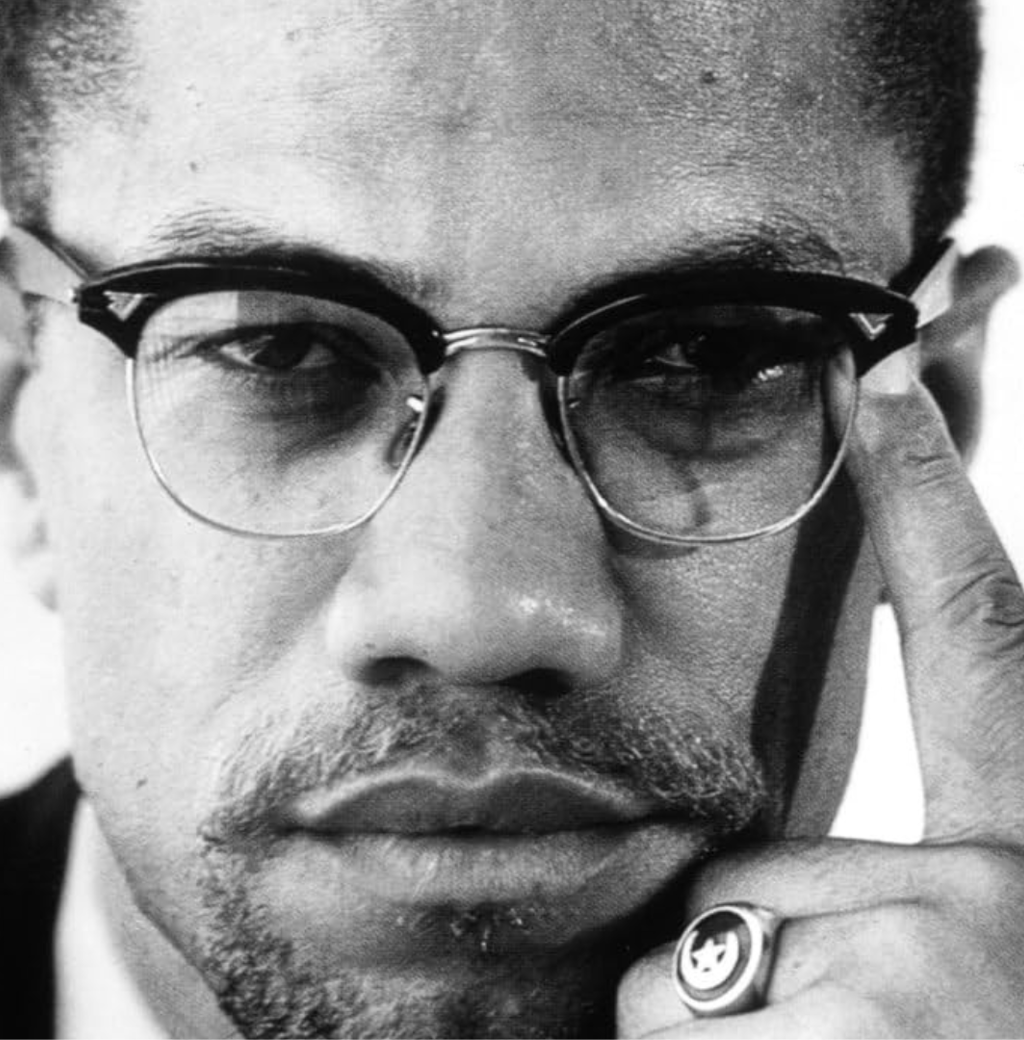
Malcolm X and the OAAU: The Blueprint for Black International Human Rights That Was Never Allowed to Fully Launch
On February 21, 1965, Malcolm X was assassinated at the Audubon Ballroom in Harlem, New York. He was 39 years old. He had founded the Organization of Afro-American Unity eight months earlier. The organization he built was, by the time of his death, still in its early stages — the architecture of a much larger project that had not yet had the opportunity to demonstrate what it could accomplish.
This is the essential tragedy of the OAAU: not that it failed, but that it was destroyed before it could succeed. We are left to evaluate not an organization's record but its blueprint — and the blueprint, studied carefully in the context of both Malcolm's intellectual evolution and the current conditions facing the global African diaspora, is more strategically sophisticated and more immediately relevant than the conventional histories of this period usually acknowledge.
Malcolm X in 1964 and 1965 was not the same Malcolm X who had spent the preceding decade as the most powerful public voice of the Nation of Islam. He had broken with the Nation in March 1964. He had made the hajj to Mecca, an experience that transformed his understanding of both Islam and race. He had traveled to Africa, met with heads of state, addressed the Organization of African Unity, and returned to the United States with an analysis of the Black freedom struggle that was qualitatively different from anything he had articulated before.
The OAAU was the organizational expression of that new analysis. Understanding it requires understanding both where Malcolm had been and where he was going.
The Evolution: From Nation of Islam to International Human Rights
Malcolm X's time in the Nation of Islam had given him a platform, a discipline, and a vocabulary for Black dignity and self-determination that reached communities the more institutionally oriented civil rights movement could not. The NOI's message — that Black people needed to separate from white American society, build their own economic and cultural institutions, and stop seeking integration with a system that was fundamentally hostile to their humanity — resonated powerfully with working-class Black people in Northern cities who experienced daily the reality of what the civil rights movement's legal victories had not changed.
But the NOI's framework had significant limitations as a basis for political action at the scale Malcolm increasingly believed was necessary. It was primarily a religious organization whose political stance was shaped by theological commitments that made broad coalition-building difficult. It was deliberately separatist in ways that isolated it from the Pan-African international networks that Malcolm was coming to understand were essential. And its focus on the conditions of Black Americans in the United States, while powerful as a local analysis, did not yet connect systematically to the global dimensions of the struggle that Du Bois's global color line framework, Nkrumah's theory of neo-colonialism, and the broader Pan-African tradition had been mapping for decades.
Malcolm's break with the NOI was in part personal and in part a recognition that the movement he wanted to build required a different organizational form. The OAAU, which he founded in June 1964, was explicitly secular — a political rather than religious organization, designed to include Black people of all faiths and no faith, oriented toward international political strategy rather than domestic cultural transformation.
The model was explicit: Malcolm named the OAAU in direct reference to Nkrumah's Organization of African Unity, which had been founded in Addis Ababa the previous year. The aspiration was equally explicit: to create an organization of African Americans that could relate to the OAU as an organizational partner — representing the interests of Black Americans as a constituency within the global African political community, not simply as a minority population seeking reform within American political institutions.
The Conceptual Shift: From Civil Rights to Human Rights
The most significant intellectual contribution Malcolm X made in the final year of his life was the precise articulation of why the civil rights framework was insufficient and what had to replace it.
Civil rights, in Malcolm's analysis, were rights that a government granted to its citizens — rights that existed within the legal framework of a particular state and that depended on that state's enforcement for their realization. The civil rights movement was asking the American government to enforce the rights it had guaranteed to Black citizens through the 13th, 14th, and 15th Amendments and through subsequent legislation. This was a legitimate and necessary demand. But it was a demand made entirely within the American political framework, entirely dependent on the American government's response, and therefore vulnerable to all of the political pressures that determined what that government was willing to do.
The fundamental problem, Malcolm argued, was that the American government was not a neutral arbiter. It was a party to the exploitation of Black Americans — the same government that had legally enforced slavery for nearly a century and legal segregation for another century after that. Asking this government to enforce Black rights was asking an interested party to rule against its own historical position. When the enforcement was insufficient, which it consistently was, the civil rights framework offered no alternative path. You could appeal to the same government again, through the same legal mechanisms, and hope for a different response.
Human rights were different in kind. They were rights that belonged to human beings by virtue of being human — not rights that a government granted but rights that existed independently of any particular government's recognition. More importantly, they were rights that were subject to international standards and international accountability. A government that violated the civil rights of its citizens was a government that had failed to honor its own laws. A government that violated the human rights of its citizens was a government that was accountable to the entire international community.
This reframing had concrete strategic implications. If the condition of Black Americans was a civil rights issue, it was a domestic American problem. The United States government could respond to international attention by invoking national sovereignty — insisting that how it treated its own citizens was not the business of other nations. But if the condition of Black Americans was a human rights issue — if it met the standards of systematic human rights violation as defined by international law — then the United States government could be brought before the United Nations, could be held accountable by the international community, and could face the kind of diplomatic and political pressure from African and Asian nations that it had some reason to care about, given the Cold War competition for influence in the decolonizing world.
Henry Sylvester Williams had been making a version of this argument since 1900, when he organized the first Pan-African Conference at Westminster Town Hall to bring the demands of African-descended people before the center of British imperial power. Du Bois had made it when he attempted to present the case of Black Americans to the United Nations in 1947. Malcolm X was taking the same strategic logic and applying it with the full force of the Cold War political moment, in which the newly independent African and Asian nations had a genuine capacity to embarrass the United States at the UN in ways that actually mattered to American foreign policy.
The Five Pillars of the Basic Unity Program
The OAAU's Basic Unity Program — the five-pillar framework that organized the organization's strategic priorities — was the most systematic and practical political blueprint Malcolm X ever produced. It represented the translation of his international analysis into a concrete program for community action, and each of its pillars addresses a dimension of the sovereignty question that the broader Pan-African tradition had been developing since the 19th century.
Restoration
The first pillar addressed the psychological and cultural foundation that all other work depended on. Restoration meant the active recovery of Black historical identity — the knowledge of who African people were before slavery and colonialism, what they built, what they created, and what was systematically stolen and destroyed in the process of their subjugation.
This was not simply a matter of cultural pride or historical knowledge for its own sake. It was, in Malcolm's analysis, a prerequisite for political action. A people who understood their history only through the framework of victimization — who knew themselves as people who had been enslaved and colonized but not as the inheritors of cultures and civilizations with their own achievements and their own frameworks for governance and community organization — were a people whose political imagination was constrained by the terms their oppressors had defined.
Du Bois's project of the Encyclopaedia Africana was an attempt to accomplish exactly this kind of restoration at the level of global scholarship. Crummell's insistence on independent Black intellectual institutions was grounded in the same understanding that a people who did not control their own narrative were permanently vulnerable to having that narrative weaponized against them. Malcolm was bringing the same insight to the level of community organizing: before people could act as a sovereign political force, they needed to understand themselves as one.
Reorientation
The second pillar was the conceptual complement to restoration: a shift in the terms through which Black people understood their situation and their possibilities. Reorientation meant replacing the integration framework — the aspiration to be accepted as full members of a society that had been built to exclude you — with a self-determination framework: the insistence on defining your own community's needs, your own political priorities, and your own standards of achievement and dignity.
This reorientation was not simply a matter of self-esteem, though it had implications for how people understood their own worth. It was a strategic reorientation — a shift from positioning Black people as supplicants requesting admission to systems that controlled their lives to positioning Black people as a sovereign political community making demands about the terms on which they engaged with those systems.
The distinction Malcolm drew between civil rights and human rights was the most precise expression of this reorientation: stop asking to be included in the American political order and start demanding accountability from the international one. The community that makes demands from a position of sovereign right is not the same community as the community that makes requests from a position of dependency. The reorientation was about changing that fundamental posture.
Education
The OAAU's approach to education was radical in the most literal sense: it went to the root. Malcolm X argued that schools managed by and accountable to the communities they served were fundamentally different institutions from schools managed by governments or institutions whose primary accountability ran elsewhere — and that this difference in governance structure produced difference in what was taught, how it was taught, and whose interests it served.
This was not an argument against formal education. Malcolm was an autodidact who had educated himself in prison with extraordinary discipline and who understood the transformative power of serious intellectual work. It was an argument about control: about who decided what Black children learned about themselves, their history, and their possibilities.
Crummell had made this argument in the 19th century when he built independent educational institutions in Liberia and in the United States. Casely-Hayford had made it in Sierra Leone when she built her girl's school on African-centered educational principles. The OAAU was proposing to make it operational at the community level in 1960s Black America.
In 2026, the same question presents itself with equal urgency and greater complexity. Who controls the algorithms that determine what information reaches Black children through digital platforms? Who governs the curricula in the schools that serve Black communities? Who decides what knowledge is considered essential and what is considered supplementary? The educational sovereignty pillar of the OAAU is not a historical artifact. It is a living strategic challenge.
Economic Security
Malcolm X's economic thinking had always been shaped by the Garveyite principle he had absorbed through his parents: that political freedom without economic independence was structurally unstable. The UNIA's model of Black economic self-sufficiency — keeping capital circulating within the community, building Black-owned business infrastructure, creating employment that served community interests — was the foundation on which his own thinking about economic security was built.
The OAAU's economic security pillar focused on building the community economic infrastructure that would reduce Black neighborhoods' dependency on exploitative external systems: predatory lending, absentee landlordism, price gouging by businesses that served Black communities without employing or investing in them. The vision was of a self-sustaining local economic ecosystem — not isolation from the broader economy but the building of sufficient internal capacity to engage that economy from a position of strength rather than dependency.
In 2026, the economic security pillar translates into questions about Black ownership of the platforms and systems through which economic activity increasingly flows, about diaspora capital coordination that allows the collective economic power of Black communities globally to be directed toward building the institutional infrastructure that individual communities lack the scale to build alone, and about the creation of financial systems that serve Black communities' interests rather than extracting from them.
The combined purchasing power of Black Americans alone approaches $2 trillion. The question is not whether the resources exist to build meaningful economic infrastructure. The question is whether the coordination necessary to deploy them strategically can be organized.
Self-Defense
The self-defense pillar was the one most calculated to disturb the sensibilities of those who preferred the civil rights movement's commitment to nonviolence as a strategic principle. Malcolm's position was not an endorsement of offensive violence. It was a specific argument about the right and responsibility of communities to protect themselves when the state was unable or unwilling to do so.
The conditions in which this argument was made are important to understand. In 1964, Black Americans in the South were being murdered, bombed, beaten, and systematically terrorized by white supremacist violence, and the federal government's response was consistently insufficient. The FBI, under Hoover, was actively monitoring and seeking to undermine civil rights organizations rather than protecting the lives of civil rights activists. Local and state law enforcement in Southern states was either complicit in the violence or actively participating in it.
In this context, Malcolm's argument that communities had the right to defend themselves was not an abstract philosophical claim. It was a response to a specific and concrete situation in which the formal mechanisms of state protection were unavailable to the people who most needed them.
In 2026, the self-defense pillar manifests in a range of questions about community safety, about the relationship between Black communities and policing systems that were built in contexts of racial control and have never been systematically reformed, about the legal and political infrastructure for demanding accountability when state violence occurs, and about the international human rights framework that Malcolm was arguing made these issues matters of global accountability rather than domestic policy.
What Was Lost and What Survived
Malcolm X's assassination on February 21, 1965 was, like the deaths of other Pan-African visionaries who were destroyed before their work was complete, a catastrophic loss for the movement he was building. The OAAU, under the leadership of his half-sister Ella Collins, attempted to continue but lacked the organizational capacity and the external support to sustain the ambitious vision that only Malcolm could fully articulate and mobilize around.
What survived was the intellectual inheritance: the precise articulation of the civil rights vs. human rights distinction that remains one of the most analytically powerful frameworks in Black political thought; the five-pillar program that provided a comprehensive rather than single-issue approach to Black liberation; the model of international political engagement — taking Black grievances to the OAU, the UN, and the international community — that directly influenced subsequent generations of Black internationalist organizers; and the specific linkage between African Americans and continental Africans that Malcolm articulated more powerfully than anyone before or since.
The Black Power movement of the late 1960s and 1970s drew directly on the OAAU's framework. The insistence on Black self-determination, community control of institutions, and economic independence that characterized Black Power organizations from the Black Panther Party to the Republic of New Afrika was Malcolmite in its intellectual foundation, even when it did not explicitly acknowledge the connection.
The OAAU in 2026: Infrastructure for the Blueprint
The question of whether a modern OAAU could thrive in 2026 is less interesting than the question of whether its framework should inform the institutional architecture that Black communities are building now. And the answer to that question is clearly yes.
The human rights framework Malcolm developed — the insistence that the treatment of Black people globally is an international human rights issue subject to international accountability, not a domestic policy matter for individual states — is more relevant, not less, in a world where international institutions have more developed human rights monitoring mechanisms than existed in 1964, and where the global connectivity of Black communities creates the possibility of the coordinated international pressure Malcolm was attempting to build.
The five pillars of the Basic Unity Program map onto the sovereignty framework with remarkable precision. Restoration and reorientation are the consciousness dimensions of sovereignty. Education and economic security are its institutional dimensions. Self-defense is its political dimension — the insistence that communities have the right and responsibility to protect their own interests when formal systems fail them.
The full Pan-African tradition that runs from Williams through Du Bois through Nkrumah through Garvey through Malcolm converges on the same structural analysis: that the liberation of African people globally requires coordinated institutional power at continental and diaspora scale, that this power must be built rather than requested, and that the building requires the kind of intentional, sustained coordination across national and cultural lines that diaspora wars actively prevent.
Malcolm X spent the last year of his life building the organizational architecture for exactly that coordination. That he was killed before it could be completed is not a reason to abandon the blueprint. It is a reason to finish it.
Recommended Reading List
To dive deeper into the strategy and philosophy of the OAAU, these texts are essential:
The Autobiography of Malcolm X by Malcolm X and Alex Haley: The definitive account of his evolution and the motivations behind the OAAU.
Malcolm X: The Last Speeches edited by Bruce Perry: A collection that captures his focus on international human rights in the final months of his life.
A Brilliant Victory for African Unity by John Henrik Clarke: An exploration of the connection between the OAAU and the continental African movements.
By Any Means Necessary by Malcolm X: A collection of speeches and interviews that detail the specific "Basic Unity Program" of the OAAU.
Community Discussion (The Bantaba)
Which of the five pillars (Restoration, Reorientation, Education, Economic Security, or Self-Defense) do you believe is the most critical for community progress in 2026?
Malcolm X argued that "Civil Rights" keep you under the thumb of the state, while "Human Rights" put you on the world stage. Does this distinction still hold value today?
How would a modern OAAU handle the diversity of the diaspora, including different languages, religions, and national identities?
In an era of globalism, is the OAAU’s rule of "no membership for non-African sources" an effective way to maintain focus, or does it limit the movement’s reach?
If you were tasked with launching a digital version of the OAAU today, what would be the very first "Economic Security" project you would fund?
Complete the series:
What Our Pan-African Ancestors Were Trying to Tell Us: Unity, Sovereignty, and the Blueprint Diaspora Wars Are Destroying
THE BLUEPRINT
Contact
hello@blackmetrics.space
Copyright © 2026 The Black Metrics. All Rights Reserved.
The BlaCK METRICS
The Pillars
Strategic Stream Blog