Marcus Garvey and the UNIA: How the Largest Black Movement in History Built the Blueprint for Global Black Sovereignty
Marcus Garvey didn't ask for inclusion. He built a nation within nations — 4 million members, 700 branches, a steamship line, and a declaration of rights that still defines the terms of Black sovereignty. Here is the full story of what he built and why it still matters.
ECONOMIC, EDUCATIONAL, & POLITICAL SOVEREIGNTY
The Black Metrics
11/17/202511 min read
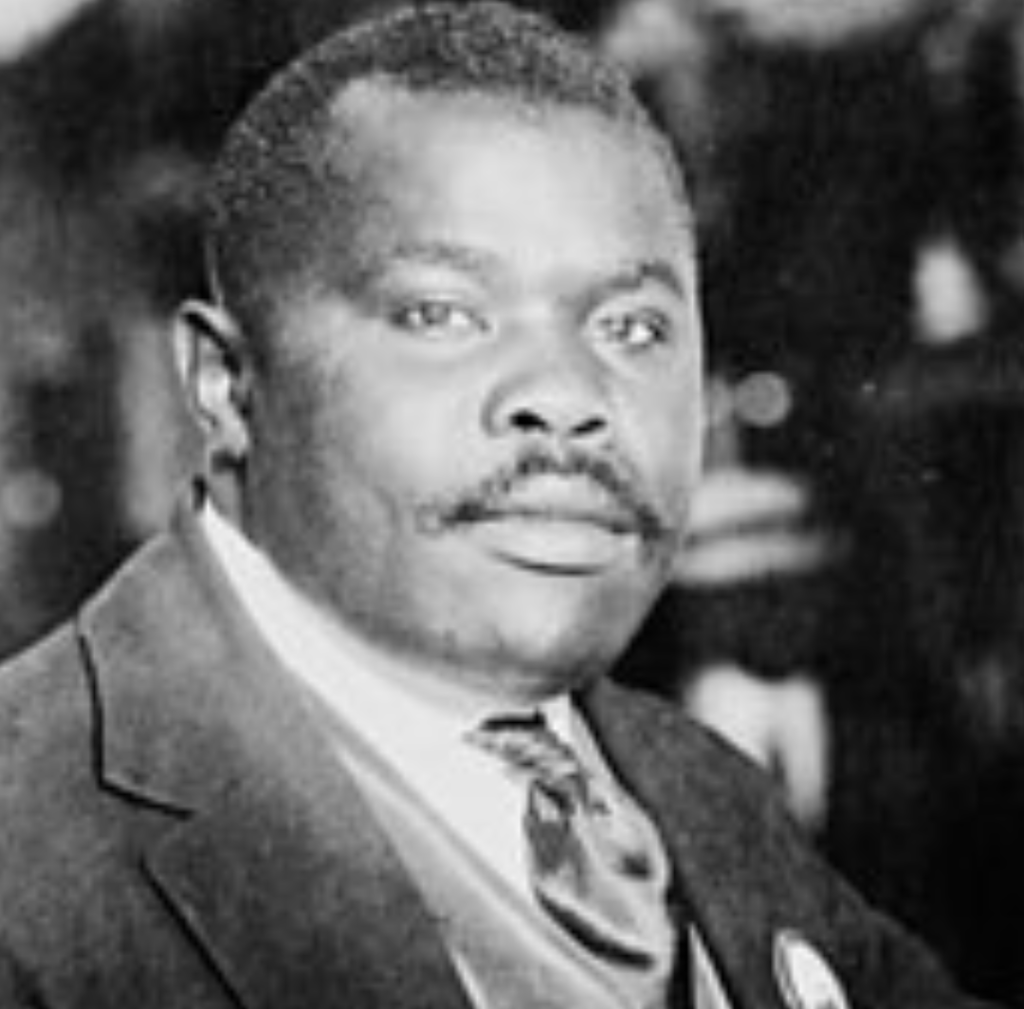
Marcus Garvey and the UNIA: How the Largest Black Movement in History Built the Blueprint for Global Black Sovereignty
There is a way of telling the history of the Black freedom movement that treats Marcus Garvey as a colorful but ultimately failed figure — a man whose grandiose vision of Black nationhood and African return was too ambitious for its moment, whose business ventures collapsed under mismanagement and government sabotage, and who ended his days in exile while the more sober, legally oriented civil rights tradition became the defining movement of Black American political life in the 20th century.
This version of the story is not simply incomplete. It is a distortion that serves the interests of the systems Garvey spent his life challenging.
The actual record is this: Marcus Garvey built, from scratch, with no government support and in the face of systematic opposition from the most powerful intelligence and law enforcement apparatus in the world, the largest mass political movement in the history of the African diaspora. He organized millions of people across dozens of countries around a vision of Black sovereignty that was more comprehensive, more economically sophisticated, and more globally oriented than anything that had come before it. He created the cultural infrastructure of a global Black nation — flags, anthems, institutions, a shared political vision — that gave millions of people who had been denied membership in any existing political order a sense of belonging to something larger than themselves. And he did it in a decade, using newspapers and telegrams and steamships and the power of his own extraordinary oratory, before the mass communications technologies that we now take for granted existed.
The UNIA was not a failure dressed up as a vision. It was a vision that was actively destroyed by state power precisely because the people in power understood how dangerous its success would be.
From Jamaica to the World: The Making of a Movement Builder
Marcus Mosiah Garvey was born in 1887 in St. Ann's Bay, Jamaica — the eleventh child of Marcus Garvey Sr. and Sarah Jane Richards. He grew up in a colonial society where the hierarchies of race, class, and color organized nearly every aspect of social life, and where the distance between the opportunities available to white colonists and those available to Black Jamaicans was not simply a matter of individual circumstances but of structural design.
He left school at fourteen to work as a printer's apprentice, an occupation that gave him both a practical skill and an introduction to the power of the printed word as a tool of political communication. By his early twenties he was already involved in labor organizing, participating in a printers' strike in Kingston in 1909 and beginning to develop the understanding of the relationship between economic exploitation and racial hierarchy that would shape his political philosophy.
The years between 1910 and 1914 were decisive for Garvey's intellectual and political formation. He traveled extensively — to Central America, where he witnessed the conditions of Black workers on banana plantations and the Panama Canal; to London, where he encountered African and Caribbean intellectuals and activists and read widely in the Pan-African tradition; and back to Jamaica, where he observed the conditions of the Black majority with eyes sharpened by everything he had seen elsewhere.
In London he read Booker T. Washington's Up from Slavery and was struck, as he later recalled, by a question that became the organizing principle of his life's work: where is the Black man's government, where is his king and kingdom, where is his ambassador and his army, where are the men of great affairs?
The question was rhetorical in Washington's framing. Garvey took it as a strategic challenge. He returned to Jamaica in 1914 and founded the Universal Negro Improvement Association.
The UNIA's Architecture: A Nation Within Nations
When Garvey moved the UNIA's global headquarters to Harlem, New York in 1916, he was making a strategic choice as deliberate as Henry Sylvester Williams's choice to base his organizing in London, the center of the British Empire. Harlem in the 1910s and 1920s was the global center of the African diaspora's intellectual, cultural, and political life — the place where the largest concentration of Black people in the Western hemisphere was building, with extraordinary creativity and energy, a culture and a consciousness that the rest of the world was being forced to take notice of.
What Garvey built in Harlem, and through the UNIA's global network of chapters, was not simply a political organization in the conventional sense. It was the institutional infrastructure of a nation — or more precisely, of a nation in formation, a global African people building the structures of self-governance while still dispersed across territories governed by others.
The scope of this ambition was expressed in the institutions the UNIA created.
The Negro World newspaper, which Garvey edited and which reached readers across the United States, the Caribbean, Latin America, and Africa, was not simply a publication. It was the UNIA's primary tool for building the shared consciousness that collective political action requires — reporting on events affecting Black people across the globe, publishing political analysis, poetry, and cultural commentary that affirmed Black identity and advanced the case for sovereignty, and maintaining the connective tissue of the global network Garvey was building.
The Black Star Line Steamship Corporation was the UNIA's most ambitious and most scrutinized economic venture. Garvey raised the capital to purchase ships from thousands of small investors across the Black diaspora — people who bought shares for five dollars each, making the corporation one of the earliest examples of mass Black investment in a major business enterprise. The vision was comprehensive: a Black-owned shipping company that would facilitate trade between Black communities across the Atlantic, provide employment for Black sailors and workers, and eventually transport those who chose to emigrate to Africa.
The Negro Factories Corporation managed a range of businesses in Harlem — grocery stores, restaurants, a laundry, a printing press — with the explicit goal of keeping economic activity and employment within the Black community. This was not charity or social enterprise in the modern philanthropic sense. It was a deliberate economic strategy: the construction of a self-sustaining economic ecosystem in which money spent by Black consumers supported Black-owned businesses, which employed Black workers, who then spent their wages in the same system.
The 1920 International Convention of the Negro Peoples of the World, held at Madison Square Garden in New York, gathered over 25,000 people for the opening session — a demonstration of the UNIA's organizational capacity that was unprecedented in Black political history. The convention produced the Declaration of Rights of the Negro Peoples of the World, a document that articulated, in 54 articles, a comprehensive bill of rights for African people globally — a formal political manifesto for Black sovereignty at a moment when the world's major powers were organizing the post-World War One international order without any representation for African or African-descended people.
The Red, Black, and Green flag — adopted at the same convention as the official banner of the African race — was not simply a symbol. It was a statement of political identity: a claim that African people constituted a global nation with the right to self-determination, and that this claim could be expressed and asserted regardless of which country's territory any individual African person happened to inhabit.
The Philosophy of Sovereignty: What Garvey Was Actually Building
Garvey's detractors, both in his own time and subsequently, have often characterized his vision as emotionally compelling but politically naive — a romantic dream of return to Africa that failed to engage seriously with the practical realities of political power. This characterization misreads both his analysis and his method.
Garvey was not proposing that all Black people in the Americas and the Caribbean immediately relocate to Africa. He understood that this was neither practically possible nor universally desired. What he was proposing was something more sophisticated: that the African diaspora needed to develop, and behave as if it had, the attributes of nationhood — collective political identity, economic institutions, cultural infrastructure, and an international political presence — regardless of where individual members of that nation physically resided.
This is, essentially, the political model that has been used by dispersed peoples throughout history. Jewish communities maintained a sense of collective identity and political aspiration across two thousand years of diaspora before the establishment of Israel. Irish Americans built political organizations in the United States that influenced British policy in Ireland for generations. The model of a dispersed people organizing as a political entity in relation to a homeland was not unprecedented. Garvey was applying it, for the first time at scale, to the African diaspora.
His economic philosophy was grounded in a sophisticated understanding of the relationship between economic independence and political power. He observed that Black communities in America and the Caribbean were economically integrated into systems controlled by white capital: they bought from white-owned stores, worked for white-owned businesses, saved in white-owned banks, and were largely excluded from the ownership and governance of the economic institutions that shaped their lives. This economic dependency, he argued, was the material foundation of political powerlessness. You could not have political sovereignty without economic sovereignty, because the economic relationships of dependency gave those with economic control the leverage to override whatever political rights you nominally possessed.
This analysis is precisely what Martin Robison Delany had articulated in the 1850s and what Alexander Crummell had been arguing from the institutional development side, and what Kwame Nkrumah would develop into a comprehensive theory of neo-colonialism forty years later. Garvey was not an isolated visionary. He was the most powerful mass organizer yet produced by a tradition of Black economic and political thought that ran deep.
The State's Response: When Governments Destroy What They Cannot Control
The most revealing fact about the UNIA is not that it eventually collapsed. It is what the government of the United States deployed to ensure that it did.
J. Edgar Hoover, then the head of the General Intelligence Division of the Bureau of Investigation — later the FBI — identified Garvey as one of the most dangerous people in America in the early 1920s. His assessment was not based on Garvey's advocacy of violence, which was not part of the UNIA's program. It was based on the size of his following, the sophistication of his organizational infrastructure, and the directness of his challenge to the racial hierarchy that American society depended on.
Hoover assigned agents to infiltrate UNIA meetings, cultivate informants within the organization, and build a legal case that could be used to destroy Garvey's ability to operate in the United States. The case they eventually built was a mail fraud charge related to the Black Star Line's fundraising — an allegation that Garvey had misrepresented the condition of a ship in promotional materials sent through the mail.
The charge was, by most historical assessments, weak. The prosecution was aggressive and the evidence contested. Garvey was convicted in 1923 and sentenced to five years in federal prison, a sentence he served for two years before President Calvin Coolidge commuted it — only to have Garvey immediately deported as an alien who had been convicted of a felony.
The pattern is one that Pan-African organizers across generations have had to contend with: the use of state power — legal processes, surveillance, infiltration, prosecution — to destroy Black organizations that became sufficiently powerful to constitute a genuine challenge to the existing order. The COINTELPRO program that targeted Black liberation organizations in the 1960s and 1970s was a direct institutional descendant of the campaign against Garvey. The mechanisms were updated but the purpose was the same.
Understanding this context is essential to understanding the UNIA's trajectory. Garvey and the UNIA did not simply fail. They were actively destroyed by the coordinated power of the state.
The Legacy That Government Could Not Destroy
What survived the deportation, the prison term, and the collapse of the UNIA's American organizational structure was something that no government could confiscate: the consciousness Garveyism had built in millions of people across the global diaspora.
The Red, Black, and Green flag became the most widely recognized symbol of pan-African identity in the world — adopted by African independence movements, Black nationalist organizations, and diaspora communities across every continent. The concept of Black pride, Black sovereignty, and African return as a political aspiration rather than simply a cultural sentiment was embedded in the political consciousness of a generation that would go on to build the movements of the 1950s, 1960s, and 1970s.
Malcolm X's parents were active UNIA organizers. His father was a Garveyite preacher who held UNIA meetings in his home. Malcolm's early political formation was saturated with Garveyite ideas — the insistence on Black dignity and self-determination, the refusal to seek integration with systems built on Black exclusion, the understanding of the Black freedom struggle as international in scope. When Malcolm X eventually developed his own framework for Black liberation, its most important intellectual ancestor was not the civil rights movement he had come to criticize but the Garveyite Pan-Africanism he had inherited from his parents.
Kwame Nkrumah's vision of African economic unity and continental sovereignty drew directly on Garvey's analysis of economic dependency and his argument that the scale of African unity had to be continental and global to be effective. The independence movements that swept Africa in the 1950s and 1960s were, in part, the institutional expression of the consciousness that Garvey had built in the 1920s.
The UNIA in 2026: What the Blueprint Demands
The question of what a 21st-century version of Garvey's vision would look like is not primarily a question about organizational structure. It is a question about whether the core strategic insight that the UNIA embodied — that Black liberation requires the construction of independent economic and political infrastructure at global scale — remains valid. And the answer is clearly yes.
The global Black population is now estimated at approximately 1.2 billion people. The combined purchasing power of Black Americans alone approaches $2 trillion annually. The diaspora controls significant capital in major global financial centers. The cultural influence of Black creativity spans every sector of the global entertainment and creative economy. The technological infrastructure for global coordination that Garvey lacked entirely now exists and is accessible.
What a modern "Black Star Line" looks like is a genuine strategic question worth serious engagement. It might look like a Pan-African digital commerce network connecting Black-owned businesses across the diaspora with Black consumers globally. It might look like a diaspora venture fund channeling capital toward Black-owned technology companies in Africa. It might look like a cross-border mutual aid and investment infrastructure that operates with the economic logic Garvey was attempting to instantiate through the UNIA's business ventures: keep value within the community, multiply its circulation, and build the economic base that political power ultimately rests on.
The full sovereignty framework that Pan-African thought has been developing for more than a century converges on the same conclusion Garvey reached: that the economic pillar of sovereignty is not separate from the political and cultural pillars but the material foundation on which both must be built. Garvey understood this not as an abstract principle but as a practical challenge — and he spent his life trying to meet it.
The blueprint he built deserves more than commemoration. It deserves execution.
Recommended Reading List
To understand the full scope of Garvey’s impact and the mechanics of his movement, consider these foundational texts:
The Philosophy and Opinions of Marcus Garvey edited by Amy Jacques Garvey: A collection of his speeches and writings that outline the core of his ideology.
Race First by Tony Martin: An exhaustive look at the UNIA's organizational structure and its global influence.
Marcus Garvey, Hero by John Henrik Clarke: A biographical perspective that places Garvey within the larger context of African history.
Negro with a Hat by Colin Grant: A modern biography that provides a detailed narrative of his life, his successes, and his eventual exile.
Community Discussion (The Bantaba)
How does Garvey’s focus on "Economic Sovereignty" differ from modern corporate diversity and inclusion initiatives?
If the Black Star Line were founded today as a digital entity, what would be its primary "product" or "service" to the diaspora?
In what ways did the "Declaration of the Rights of the Negro Peoples of the World" set the stage for later human rights movements?
How can modern communities protect their institutions from the kind of external sabotage that the UNIA faced in the 1920s?
Which of the eight pillars of sovereignty—Economic, Educational, or Political—do you believe is the most urgent for the current generation to master?
Complete the series:
What Our Pan-African Ancestors Were Trying to Tell Us: Unity, Sovereignty, and the Blueprint Diaspora Wars Are Destroying
This is the work of Black Sovereignty. Garvey's blueprint, economic independence, cultural identity, and global institutional unity, is the foundation of Volume One.
→ Get your copy Black Sovereignty
THE BLUEPRINT
Contact
hello@blackmetrics.space
Copyright © 2026 The Black Metrics. All Rights Reserved.
The BlaCK METRICS
The Pillars
Strategic Stream Blog