Social Democracy in America: Rebuilding a System That Works for Everyone, Especially Black Communities
The Strategic Briefing, "Social Democracy in America: Rebuilding a System That Works for Everyone, Especially Black Communities," argues that shifting from a liberal capitalist model to a social democratic one would provide the structural repair needed to address deep-seated racial and economic inequalities. The author contends that this transition is not about ending markets. Instead, it focuses on ensuring basic human needs such as healthcare and education are treated as rights rather than luxuries.
POLITICAL SOVEREIGNTY | AFRICAN AMERICAN EDUCATION
The Black Metrics
11/29/20254 min read
Social Democracy in America: Rebuilding a System That Works for Everyone, Especially Black Communities
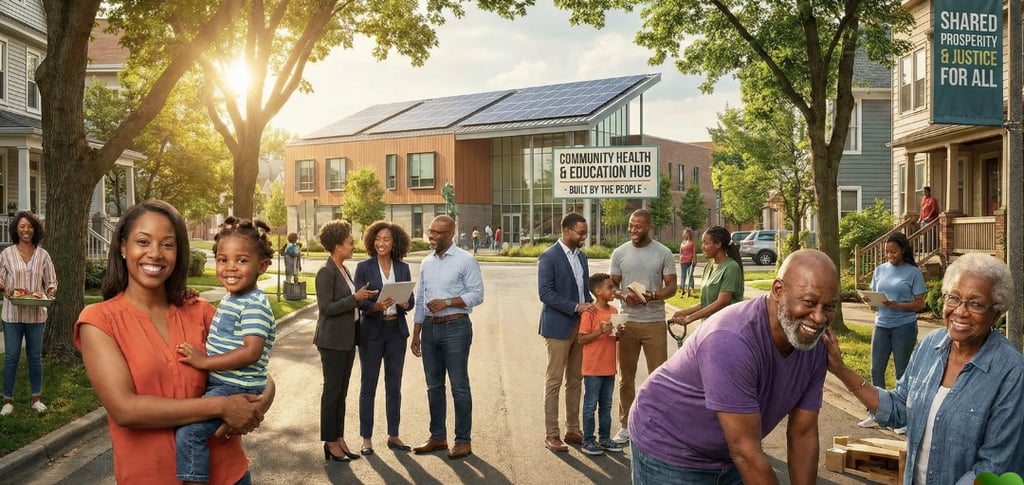
America has always reinvented itself. Every generation has faced the same fundamental question: how do we build a society where prosperity is shared, justice is real, and opportunity is not reserved for a privileged few? Today, that question feels more urgent than ever. Millions of people are working harder than their parents yet falling further behind. Inequality widens. Wages stall. Healthcare, childcare, and education are increasingly treated as luxuries instead of basic rights.
More people are beginning to wonder whether the United States can evolve into a model that centers human well-being instead of treating it as an afterthought. That model already exists. It is called social democracy, a system that preserves markets and innovation while ensuring dignity, fairness, and real opportunity for all.
For African Americans, who have historically carried the heaviest burdens of inequality, the possibilities are especially transformative.
What Social Democracy Actually Means
Social democracy is not the end of capitalism. It is the end of allowing capitalism to operate without responsible rules.
In today’s version of liberal capitalism, the United States experiences weak social protections, strong corporate influence, limited worker power, and public goods tied directly to income or employment. It is a system built on the philosophy that markets should decide almost everything, including whether people have access to healthcare or affordable education.
A shift away from liberal capitalism does not dismantle the country. It simply adjusts the priorities. A social democracy centers equity, universal access to basic needs, shared prosperity, and strong public investment. Markets still operate. Businesses still innovate. People simply gain protections that prevent them from falling through the cracks.
These changes are reforms that can be implemented through democratic processes already in place.
How a Social Democracy Could Be Built in the United States
A stronger, people-centered system can emerge through legislation, policy changes, and constitutional tools already available.
Universal Healthcare
A social democracy replaces employer-dependent insurance with publicly supported healthcare that covers everyone. This can be done by expanding Medicare, creating a national public insurance plan, or allowing states to launch regional models. The result is universal coverage, lower costs, and protection from medical debt.
Universal College, Trade School, and Childcare
Education and childcare become rights instead of privileges tied to income. Partnerships across federal and state levels can make community colleges tuition free, expand trade and technical programs, and provide accessible childcare centers in every district. Families gain stability, and economic mobility becomes real.
Stronger Worker Rights
Workers gain a fair balance of power with corporations. Union rights expand, paid leave becomes standard, anti-discrimination measures strengthen, and workplace protections improve. Wages rise, and people gain the stability needed to build secure lives.
Wealth and Corporate Tax Reform
The goal is not punishment. It is modernization. Closing loopholes, updating capital gains taxes, and creating public investment funds ensures revenue returns to communities that need it most.
Public Options in Key Sectors
Public options offer reliable alternatives when private markets fail. Broadband, utilities, housing development, and banking services become more accessible, more affordable, and more accountable.
Democratic Reforms
A stronger democracy supports a stronger social democracy. Automatic voter registration, ranked choice voting, independent redistricting, and campaign finance reform help ensure that political power reflects the public more accurately.
What a Social Democracy Would Look Like in the United States
Imagine an America where healthcare is guaranteed, childcare is affordable, and higher education is accessible without lifelong debt. Picture workers earning wages that support a decent life, communities receiving sustained investment, and inequality beginning to shrink rather than expand.
It remains the same America, but it becomes a country that values collective well-being alongside economic freedom.
How Social Democracy Would Transform Life for African Americans
Because African Americans sit at the intersection of economic and racial inequality, a social democracy brings especially deep benefits. These changes are not charity. They are structural repair.
Universal Healthcare Creates Better Health Outcomes
Black communities face higher rates of chronic illness, maternal mortality, and medical debt. Guaranteed healthcare, preventive care, maternal health initiatives, and protection from financial ruin all close these gaps and strengthen future generations.
Stronger Worker Rights Lead to Higher Wages and Safer Jobs
Black workers are overrepresented in low-wage and high-risk industries. Expanded worker protections, stronger unions, and reinforced anti-discrimination laws improve pay, workplace safety, and long-term financial stability.
Universal Childcare and Education Expand Mobility
Black families often face higher childcare expenses and heavier student debt. Universal childcare, free community colleges, expanded trade programs, and investment in underfunded schools provide real mobility and generational uplift.
Fair Taxation and Public Investment Strengthen Communities
Fairer taxation supports investment in schools, transportation, housing, and infrastructure. Communities that have been historically underfunded gain the resources needed for long-term growth.
Public Options Reduce Predatory Barriers
Predatory lending, unfair utilities, and exploitative financial systems have long targeted Black communities. Public options provide safer, more affordable alternatives and reduce systemic harm.
A Fairer Democracy Strengthens Black Political Power
Removing voter suppression, creating fair districts, and reforming campaign finance elevates Black political influence and makes government more accountable.
Lower Inequality Narrows Wealth Gaps
When inequality falls, the communities hit hardest by it experience the greatest gains. Wealth gaps begin to close, and opportunities expand.
Stability Creates Space for Wealth Building
When healthcare, childcare, education, and wages stabilize, families gain the freedom to save, invest, buy homes, build businesses, and create generational wealth.
Why Black America Gains the Most From a Social Democracy
Inequality has harmed Black communities the most, so the solutions designed to reduce inequality naturally produce the strongest improvements where the need is greatest. Social democracy is not dependency. It is empowerment. It is measurable progress rooted in fairness and shared opportunity.
It reflects the values America has always claimed to uphold: dignity, equality, and opportunity for all.
THE BLUEPRINT
Building the future of the global African Diaspora through data-driven storytelling and the Eight Pillars of Sovereignty. From survival to ownership.
Contact
Subscribe To the NewsLETTER
hello@blackmetrics.space
Copyright © 2026 The Black Metrics. All Rights Reserved.
The BlaCK METRICS