The Architect of Autonomy: The Uncompromising Vision of Martin Robison Delany
This Strategic Briefing explores the remarkable life and legacy of Martin Delany. He was a pioneering abolitionist, journalist, and military officer who stood as a towering architect of Black empowerment. While he is often overshadowed by his contemporary, Frederick Douglass, Delany remains one of the 19th century’s most uncompromising advocates for self-reliance and dignity. The briefing traces his inspiring evolution from his days as a collaborator and co-editor of The North Star to his role as a leading champion for independent nationhood and collective agency. His groundbreaking 1852 work is highlighted as a foundational text for political and economic autonomy. This work urged a vision of a future where communities could thrive on their own terms.
ECONOMIC, EDUCATIONAL, & POLITICAL SOVEREIGNTY | PAN-AFRICAN HISTORY
The Black Metrics
12/16/20255 min read
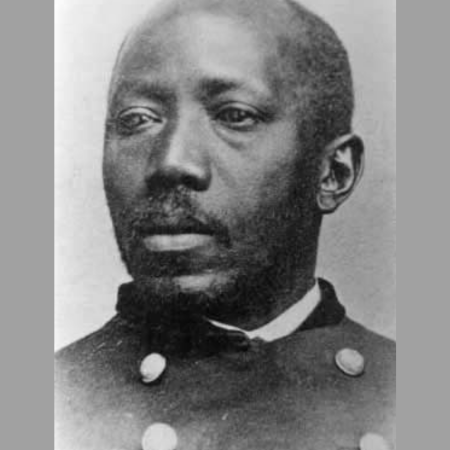
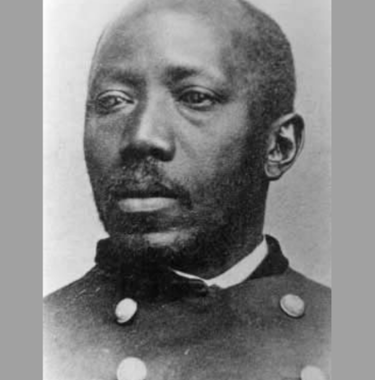
The Architect of Autonomy: The Uncompromising Vision of Martin Robison Delany
While the name Frederick Douglass often dominates the narrative of 19th century abolitionism, few figures embodied the fiery spirit of collective self-determination as completely as Martin Robison Delany. Born in 1812 and passing in 1885, Delany was a true Renaissance man. He served as a physician, editor, explorer, and military major. More than just a leader, Delany was a radical voice who became the foundational architect of Black empowerment in America.
His life was a relentless pursuit of dignity. He was driven by the unwavering belief that true freedom required more than the absence of chains. To Delany, freedom required the presence of independent political and economic destiny.
Early Defiance and the Power of the Press
Born free in Charles Town, Virginia, which is now West Virginia, Delany’s journey toward leadership began with a profound act of defiance. His mother, Pati, fled to Pennsylvania to avoid persecution for teaching her children to read. This was a dangerous act because it was illegal for Black people in Virginia at the time. This early lesson in the transformative power of education stayed with Delany throughout his entire life.
By the 1840s, he had become one of the most prominent figures in the antebellum North. In 1843, he founded The Mystery in Pittsburgh. This was one of the earliest independent Black owned newspapers. He used this platform to champion social reform and report on the struggles of the working class.
His brilliance eventually caught the attention of Frederick Douglass. Together, they served as co editors of the seminal abolitionist newspaper, The North Star. While Douglass was the famed orator, Delany was the tireless traveler. He trekked across the North to build subscriptions and organize grassroots support. Despite their partnership, the two often differed on strategy. Douglass focused on reforming America from within, while Delany began to look toward the strength of independent Black institutions.
The Harvard Incident: A Turning Point in Identity
Delany’s early career was rooted in the hope of integration, but a pivotal moment of injustice changed his trajectory forever. In 1850, Delany was one of the first three Black students admitted to Harvard Medical School. However, his time there was short lived. Following intense protests from white students who claimed his presence devalued their degrees, the faculty forced his withdrawal after only one semester.
This rejection was a major catalyst for his philosophy. Delany realized that even the highest levels of achievement and education could not shield a person from systemic prejudice. He returned to his community and practiced medicine as a skilled physician, but his political outlook shifted toward total self reliance.
The Radical Vision for Independent Nationhood
By 1852, Delany concluded that the promises of equality in America were hollow. He published a groundbreaking treatise titled The Condition, Elevation, Emigration, and Destiny of the Colored People of the United States. This book became a foundational text for the idea of independent nationhood.
He famously argued that his people were "a nation within a nation." He suggested that the path to true respect lay in building their own institutions, economies, and perhaps even a sovereign territory. This conviction led him to West Africa in 1859. There, he led an expedition to the Abeokuta region of modern day Nigeria. He signed treaties with local leaders to explore the establishment of a settlement. This was a bold international venture that positioned him as a pragmatic global statesman.
Breaking the Military Barrier: Major Delany
When the Civil War erupted, Delany’s focus shifted back to the United States. He saw the conflict not just as a war to end slavery, but as an opportunity for Black men to prove their right to citizenship through martial valor. He became a primary recruiter for the 54th Massachusetts Infantry, which was the famous regiment celebrated for its bravery at Fort Wagner.
His ultimate triumph occurred in February 1865. Delany secured a personal meeting with President Abraham Lincoln to propose an army of Black troops led by Black officers. Lincoln was deeply impressed by his intellect. Shortly after this meeting, Delany was commissioned as a Major in the U.S. Army. This made him the first Black field officer in American history. This was not just a promotion. It was a direct and visible contradiction to the myth of racial inferiority.
A Legacy of Empowerment and Excellence
After the war, Delany served with the Freedmen's Bureau in South Carolina. In this role, he worked to ensure that newly emancipated people received fair labor contracts and access to quality education. Even in his later years, he remained politically active and ran for Lieutenant Governor. He continued to write on the inherent greatness of African heritage until his final days.
Delany’s legacy is a masterclass in several key principles:
Economic Control: He believed that freedom is fragile without land and financial independence.
Global Solidarity: He saw the struggle for dignity as an international movement rather than a local one.
Intellectual Excellence: He refused to accept anything less than full participation in the highest levels of science, politics, and military leadership.
Martin Delany was a man ahead of his time. He taught future generations that true freedom is not a gift to be requested, but a destiny to be seized and built with one’s own hands.
Further Reading and Primary Sources
To truly understand the depth of Martin Delany’s vision, it is helpful to explore the original documents and modern scholarship that preserve his legacy. Below is a curated list of resources for those who wish to dive deeper into his life and the era of self-determination.
Primary Works by Martin Delany
The Condition, Elevation, Emigration, and Destiny of the Colored People of the United States, Politically Considered (1852): This is Delany’s most famous work. It outlines his shift from integration to a philosophy of independent nationhood.
Official Report of the Niger Valley Exploring Party (1861): This detailed account provides a window into Delany’s travels in West Africa and his diplomatic efforts with local leaders.
Blake; or, The Huts of America (1859-1862): A serialized novel that serves as a powerful response to Uncle Tom’s Cabin. It presents a much more militant and proactive vision of resistance.
Recommended Biographies and Analysis
Martin R. Delany: A Documentary Reader edited by Robert S. Levine: This collection is an essential resource for reading Delany’s letters, speeches, and articles in their original context.
The Lives of Frederick Douglass and Martin Delany by Robert S. Levine: A fascinating "dual biography" that explores the professional partnership and eventual ideological split between these two giants of the 19th century.
Martin Delany: The Father of Black Nationalism by Victor Ullman: While using older terminology, this biography provides an exhaustive look at his military service and his time with the Freedmen’s Bureau.
Community Discussion (The Bantaba)
How did the incident at Harvard Medical School act as a turning point for Delany’s political philosophy?
In what ways did Delany’s vision of "economic control" differ from the mainstream abolitionist goals of the time?
How does Delany’s military commission as a Major represent a shift in the way leadership was viewed during the Civil War?
Why is it important to remember Delany alongside more famous figures like Frederick Douglass when discussing the history of empowerment?
THE BLUEPRINT
Building the future of the global African Diaspora through data-driven storytelling and the Eight Pillars of Sovereignty. From survival to ownership.
Contact
Subscribe To the NewsLETTER
hello@blackmetrics.space
Copyright © 2026 The Black Metrics. All Rights Reserved.
The BlaCK METRICS