W.E.B. Du Bois and the Birth of Modern Pan-Africanism
This Strategic Briefing explores the intellectual and activist legacy of W.E.B. Du Bois, specifically his role as a foundational architect of Pan-Africanism. It reframes Du Bois not just as an American civil rights leader, but as a global strategist who connected the struggles of the African diaspora to the liberation of the African continent
ECONOMIC, EDUCATIONAL, & POLITICAL SOVEREIGNTY | PAN AFRICAN HISTORY
The Black Metrics
11/27/20254 min read
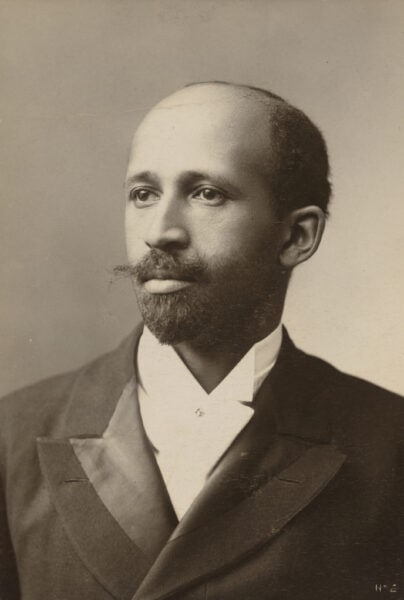
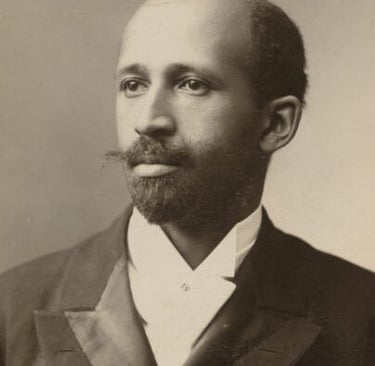
How one thinker connected a global people and reimagined Black liberation
When we talk about Pan-Africanism today and the idea that people of African descent around the world share a common destiny we are standing on the shoulders of giants. One of the tallest among them is W.E.B. Du Bois, the scholar activist who helped shape the very meaning of global Black unity.
Du Bois was not just dreaming about Africa from afar. He was building a framework for how African people, at home and abroad, could understand their shared past, fight their shared struggles, and imagine a shared future. His vision blended history, politics, culture, and economics into a powerful philosophy of liberation.
The Psychology of Double Consciousness
To understand Du Bois's global vision, one must first understand his concept of Double Consciousness. In his foundational work, The Souls of Black Folk, he described this as a sense of always looking at one’s self through the eyes of others. He argued that Black people in the West lived with two conflicting identities: being American and being of African descent.
For Du Bois, this was not just a source of internal struggle but a potential source of strength. He believed that this "second sight" allowed the diaspora to see the hypocrisies of Western democracy with unique clarity. By embracing their African identity, Du Bois argued that the diaspora could move beyond seeking mere acceptance in a hostile society and instead work toward Global Solidarity. This psychological shift was the necessary first step toward Pan-Africanism. It turned a feeling of displacement into a sense of belonging to a vast, global family.
The Global “Color Line”
Du Bois famously stated that the problem of the 20th century was the problem of the color line. However, he believed that racism was not just an American issue; it was a worldwide system. He saw that colonialism in Africa and segregation in the U.S. were two sides of the same coin. To fight one, he argued, you had to confront both.
This realization led him to prioritize international human rights over local civil rights. He insisted that the African diaspora had a duty to support African liberation, while a free Africa would provide the necessary geopolitical leverage to uplift the diaspora.
Building Global Bridges: The Pan-African Congresses
In 1900, Du Bois joined the first Pan-African gathering in London, a meeting that planted seeds for decades of organizing. He later helped lead a series of Pan-African Congresses in 1919, 1921, 1923, and 1927. These were not merely academic exercises. They were the early blueprints for:
African Independence Movements: Providing a platform for future leaders like Kwame Nkrumah.
Global Solidarity: Unifying voices from the Caribbean, Europe, and the Americas.
Anti-Colonial Resistance: Challenging the moral and economic legitimacy of European empires.
Through his editorship of The Crisis, the official magazine of the NAACP, he connected the domestic struggle to global events. When he reported on the 1919 Pan-African Congress in Paris, he reached a circulation of over 100,000 readers, successfully internationalizing the consciousness of Black Americans.
Culture, History, and Economics
Du Bois believed that political freedom was hollow without a foundation of truth and economic justice. He saw how colonial historians had long distorted or erased the achievements of African civilizations. To counter this, he envisioned the Encyclopaedia Africana, a massive effort to document the real story of the African world.
In his final years, at the invitation of President Kwame Nkrumah, Du Bois moved to Ghana to begin work on this project. He chose to spend his last days on the continent, signaling his ultimate commitment to the land of his ancestors. He understood the economic roots of oppression as well. He viewed socialism as a tool to break the exploitative structures created by capitalism and colonialism, noting that the wealth of the West was built on the resources of the global South.
A Vision Too Big for His Time—But Perfect for Ours
Du Bois often clashed with his contemporaries. He famously disagreed with Marcus Garvey’s mass-movement tactics, yet he never abandoned his central belief that the freedom of Black people everywhere is tied together.
Today, we see the foundations he laid in the African Union’s diaspora initiatives and global movements for reparations. In 2026, with a global Black population of over 1.4 billion people and instant digital communication, the "bridges" Du Bois tried to build with steamships and letters are now digital highways.
Essential Reading List on Du Bois & Pan-Africanism
The Souls of Black Folk (1903): Foundational for understanding "Double Consciousness."
The African Roots of War (1915): An essay connecting imperialism to global conflict.
The Pan-African Congress Manifestos (1919–1945): These map the evolution of global strategy.
The World and Africa (1947): A historical interpretation of Africa's central role in civilization.
Darkwater: Voices from Within the Veil (1920): Essays blending political thought with spiritual reflection.
Community Discussion (The Bantaba)
How does the concept of "Double Consciousness" explain why many in the diaspora feel a strong pull toward African history today?
Du Bois argued that domestic racism and international colonialism were linked. In 2026, do you see connections between local community issues and global economic trends?
In the age of social media, who holds the responsibility for "telling the real story" of African history to combat old colonial narratives?
If Du Bois were organizing a Pan-African Congress in 2026, what would be the top three items on his agenda?
The clash between Du Bois and Garvey represented two different paths to the same goal. Do you think modern movements benefit more from institutional scholarly work or mass-mobilization?
How can we practically implement Du Bois’s vision of "Economic Justice" in our local neighborhoods today?
THE BLUEPRINT
Building the future of the global African Diaspora through data-driven storytelling and the Eight Pillars of Sovereignty. From survival to ownership.
Contact
Subscribe To the NewsLETTER
hello@blackmetrics.space
Copyright © 2026 The Black Metrics. All Rights Reserved.
The BlaCK METRICS