W.E.B. Du Bois: How the Architect of Global Black Consciousness Built the Framework That Pan-Africanism Still Runs On
W.E.B. Du Bois didn't just analyze Black oppression — he designed the system of thinking through which a dispersed people could understand their shared condition, coordinate their response, and build toward sovereignty. This is the full architecture.
ECONOMIC, EDUCATIONAL, & POLITICAL SOVEREIGNTY
The Black Metrics
11/27/202512 min read
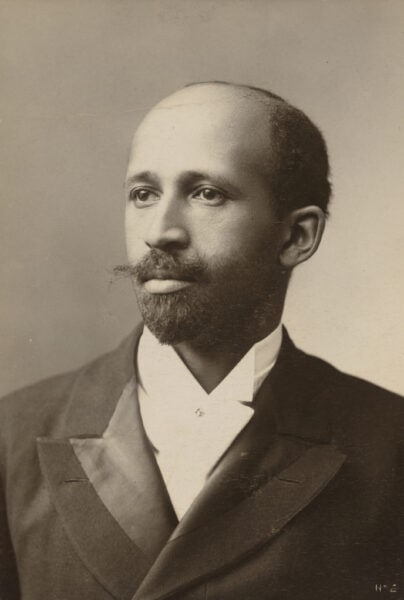
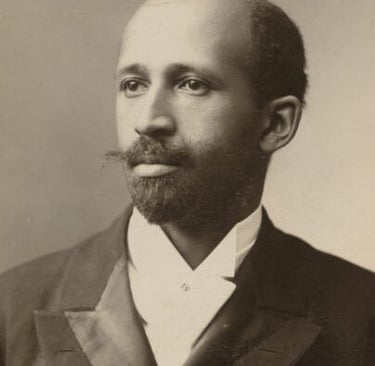
W.E.B. Du Bois: How the Architect of Global Black Consciousness Built the Framework That Pan-Africanism Still Runs On
Every great movement needs strategists who can work at multiple scales simultaneously — who can see the individual experience and the global system, the immediate grievance and the structural cause, the present crisis and the multi-generational horizon — and who can build the intellectual frameworks through which others can do the same kind of seeing. W.E.B. Du Bois was, across a career that spanned more than sixty years and produced some of the most significant political and intellectual work of the 20th century, exactly this kind of strategist.
What distinguishes Du Bois from many of his contemporaries is not simply the range or quality of his analysis, though both were extraordinary. It is the systems-level orientation of his thinking. He was not simply describing conditions or making moral arguments. He was designing — constructing conceptual frameworks, institutional blueprints, and strategic approaches through which the global African diaspora could understand its situation with the precision necessary for effective action.
He worked before the digital age, before global telecommunications, before the infrastructure that makes cross-border coordination logistically simple. He was solving for a scale of coordination that the tools of his era barely supported. And the framework he built — for understanding identity, for analyzing global power, for connecting the local to the international, for building the institutional infrastructure of Black consciousness — is the framework that Pan-African thought still runs on.
The Education of a Global Mind
William Edward Burghardt Du Bois was born in 1868 in Great Barrington, Massachusetts — a small town in the Berkshires where the Black community was small enough that he grew up with a relatively integrated experience of American life. His early years gave him both the academic foundation and the personal experience of the contradiction between American democratic ideals and American racial reality that would shape his entire intellectual career.
He was a brilliant student who pursued his education with the intensity of someone who understood, from early on, that intellectual excellence was a political act. He attended Fisk University in Nashville, where he first encountered the full weight of Southern American racism, and then completed his undergraduate work at Harvard, where he graduated cum laude in 1890. He pursued graduate study at Harvard and at the University of Berlin, becoming in 1895 the first African American to earn a PhD from Harvard.
His doctoral dissertation — The Suppression of the African Slave Trade to the United States of America, 1638–1870 — was the first volume published in the Harvard Historical Studies series, a credential that established him immediately as a scholar of the first rank. He followed it in 1899 with The Philadelphia Negro, a sociological study of the Black community in Philadelphia that is now recognized as a founding document of American sociology. Both works demonstrated the approach that would characterize Du Bois's scholarship throughout his career: the application of rigorous empirical methods to questions that most white scholars either ignored or approached with the distorting lens of racial ideology.
Double Consciousness: A Strategic Diagnosis
In 1903, Du Bois published The Souls of Black Folk — a collection of essays that is among the most important books in the history of American thought. Its famous opening assertion — that the problem of the twentieth century is the problem of the color line — framed the central challenge of his era with a precision and scope that most of his contemporaries had not achieved. But the conceptual contribution of The Souls of Black Folk that has proven most enduring and most generative for Pan-African thought is the concept of double consciousness.
Du Bois described double consciousness as the sense of always looking at oneself through the eyes of others — the peculiar condition of African Americans who were simultaneously American and of African descent, who held two identities that the dominant culture of their society had declared irreconcilable. He described this as a peculiar sensation, a twoness, as if two warring ideals existed in one dark body.
It is easy to read this as simply a description of psychological suffering, and it is certainly that. But Du Bois's analysis was also a strategic diagnosis, and it is in this dimension that its enduring significance for Pan-African thought lies.
Double consciousness was not, in Du Bois's framework, simply a wound. It was also — if understood correctly — a form of clarity. To stand at the intersection of two ways of seeing the world, to inhabit a position from which you could see simultaneously both what America claimed to be and what it actually was, was to have access to a critical perspective that the dominant culture, embedded in its own assumptions, could not achieve. The contradiction between the promise of American democracy and its actual practice was visible to Black Americans with a sharpness that white Americans, for whom the gap was not a lived daily experience, could avoid acknowledging.
This second sight, Du Bois argued, was not simply a personal resource. It was the potential basis for a collective political capacity — the ability to analyze systems of power with the clarity that comes from experiencing their effects directly. A people who understood, from the inside, how the rhetoric of democratic freedom coexisted with the practice of racial exclusion were a people who could see through the ideological camouflage of power in ways that those who benefited from that power could not.
The strategic implication was significant. Before institutions, before coordination, before any of the organizational work of liberation, there had to be a shift in consciousness — a movement from seeking acceptance within the existing order to analyzing and challenging the order itself. Double consciousness, properly understood, was not a disability to be overcome. It was the foundation of political clarity.
The Global Color Line: Zooming Out to See the System
Du Bois's extension of the color line concept beyond the borders of the United States was one of the most strategically important intellectual moves of his career. His 1915 essay The African Roots of War — written at the beginning of World War One — argued that the conflict tearing Europe apart was not primarily the product of European nationalism or the failure of European diplomacy. It was the product of colonialism: the competition between European powers for the control of African territories and African resources that had been building since the late 19th century.
This argument, which seemed radical in 1915, has held up remarkably well as historical analysis. But its significance for Pan-African thought extended beyond its accuracy as an explanation of World War One. It represented a methodological principle: that to understand Black oppression in any one location, you had to understand it within the global system that produced it.
The conditions facing African Americans in the Jim Crow South were not the product of local Southern culture or individual white prejudice. They were the product of a global racial economy in which the extraction of value from people of African descent — through slavery, through colonial labor, through the systematic denial of economic opportunity — was a structural feature of how Western capitalism operated. The segregation law in Alabama and the colonial land grab in Nigeria were not separate phenomena. They were expressions of the same system.
This analysis had a direct strategic corollary: that if oppression was globally coordinated, resistance had to be globally coordinated as well. A movement that focused only on conditions in one country, or one territory, or one diaspora community, was fighting a local battle against a global system. It could win tactical victories but could not win the structural transformation that genuine liberation required.
This is the same insight that Henry Sylvester Williams had been acting on since 1897 when he founded the African Association in London — the recognition that the problem was global and that the response therefore had to be global. Du Bois's intellectual contribution was to provide a comprehensive theoretical framework that explained why this was true, not just that it was true.
The Pan-African Congresses: Testing Whether a Dispersed People Could Act as One
Du Bois attended the first Pan-African Conference in London in 1900, organized by Henry Sylvester Williams, and the experience planted a seed that he spent the next four decades cultivating. Beginning in 1919 with the First Pan-African Congress in Paris — organized partly to coincide with the Versailles Peace Conference, where Du Bois sought to insert African and diaspora interests into the post-World War One settlement — he organized and participated in a series of congresses that were among the most ambitious attempts at global Black coordination in history.
The Second Pan-African Congress met in 1921, spanning sessions in London, Brussels, and Paris. The Third met in 1923 in London and Lisbon. The Fourth met in 1927 in New York. The Fifth — the Manchester Congress that was decisive for Kwame Nkrumah's political formation and for the post-World War Two independence movement — met in 1945.
Each congress faced the logistical and political challenge of organizing people who were scattered across multiple continents, spoke different languages, operated in different political systems, and had different immediate priorities. That Du Bois persisted across three decades of this work, in the face of limited resources, limited institutional support, and active opposition from governments that viewed Pan-African coordination as a threat, is a measure of how central he believed this work was to the larger liberation project.
The congresses were not merely symbolic gatherings. They produced policy resolutions — demands addressed to the League of Nations and later the United Nations for the recognition of African sovereignty and the rights of colonized peoples. They built networks of relationship and trust between African and diaspora leaders that influenced the development of independence movements. They trained a generation of organizers in the practice of cross-border political coordination.
And they demonstrated, repeatedly, that a dispersed population with no shared government, no shared currency, and no shared formal institutions could nonetheless coordinate around shared analysis and shared demands when the intellectual framework for doing so existed.
The Crisis and the Power of Controlled Narrative
Running parallel to Du Bois's international organizing was a project of consciousness-building that reached a scale that the Pan-African congresses, however significant, could not match. From 1910 to 1934, Du Bois served as the editor of The Crisis, the official magazine of the National Association for the Advancement of Colored People, transforming it from an organizational newsletter into one of the most important political publications in America.
The Crisis at its peak reached more than 100,000 readers per issue — an extraordinary circulation for a Black-owned publication in the early 20th century. But the significance of the magazine extended beyond its numbers. Under Du Bois's editorship, it consistently did something that no mainstream American publication was doing: it reported on Black life across the full range of its experience, from the violence of lynching and racial terror to the achievements of Black scholarship, art, business, and political organizing; it connected local conditions to global patterns; it reported on developments in Africa, the Caribbean, and Black communities across Europe; it reviewed books by Black authors and provided a platform for Black intellectual life that the white-controlled press systematically denied.
The Crisis was, in Du Bois's hands, an exercise in what he called narrative control — the power to define how events are understood, how history is recorded, and how a people sees itself. He understood, with extraordinary clarity, that the material conditions of Black life could not be improved without first transforming the consciousness through which Black people understood their situation. A people who saw themselves through the eyes of a culture that defined them as inferior, as subjects of history rather than agents of it, as dependent rather than capable of sovereignty, were a people whose political potential was limited by the internalized logic of their own oppression.
This analysis runs directly parallel to what Alexander Crummell had been arguing from the intellectual tradition side — that institutional sovereignty required cultural and intellectual sovereignty as its foundation, and that Black people's ownership of their own narrative was not simply a matter of pride but a strategic prerequisite for political power.
Du Bois and Garvey: The Debate That Defined a Generation
No account of Du Bois's place in Pan-African history can avoid the disagreement with Marcus Garvey that has been one of the most discussed conflicts in the history of the Black freedom movement. The two men disagreed publicly and often bitterly, and the disagreement has been used by subsequent commentators to define them as opposing poles of a strategic debate about how Black liberation happens.
Marcus Garvey's UNIA represented a model of mass mobilization organized around economic nationalism, racial pride, and the explicit goal of building an independent African state to which the diaspora could return. Garvey's approach was populist, emotionally compelling, and capable of reaching millions of people who had no access to or interest in the academic and intellectual frameworks through which Du Bois worked. His genius was for building the emotional and cultural infrastructure of Pan-African solidarity — the flags, the anthems, the institutions, the sense of shared destiny that created the feeling of belonging to a global African nation.
Du Bois's approach was more institutionally oriented and more intellectually demanding. He was working through the NAACP, through the Pan-African congresses, through The Crisis, through his scholarship — building the analytical frameworks and the institutional presence that he believed were necessary for sustained, strategic political power. He was less interested in mass mobilization around shared emotion and more interested in developing the political, legal, and economic strategies that could change structural conditions.
The disagreement between them was real and significant. They had different assessments of what the primary leverage points of Black liberation were, different theories of political change, and different constituencies. But the framing of their conflict as an either/or choice between two incompatible approaches has always served the interests of those who wanted to prevent rather than enable Black liberation. What the moment required was both the mass mobilization Garvey could generate and the institutional strategy Du Bois was building. The fact that they could not see this clearly enough to find ways to work in complementary rather than competitive modes was a genuine failure — one that the diaspora wars framework would later identify as a recurring pattern in Black liberation politics.
Ghana, the Encyclopaedia Africana, and the Final Chapter
In 1961, at the age of 93, Du Bois made a decision that stands as one of the most symbolically powerful acts of his long career: he accepted Kwame Nkrumah's invitation to move to Ghana and work on the Encyclopaedia Africana — a comprehensive documentation of African history, culture, and achievement that he had been proposing since the beginning of his career.
He applied to join the Communist Party of the United States the same year, a gesture that had as much strategic as ideological content — a statement that the United States government, which had revoked his passport and subjected him to years of harassment during the McCarthy era, had no claim on his loyalty that he was obligated to honor.
In Ghana, he began work on the encyclopaedia project with the support of Nkrumah's government and an international board of scholars. He died in Accra on August 27, 1963 — one day before the March on Washington at which Martin Luther King Jr. delivered the "I Have a Dream" speech that would become the most celebrated oration of the American civil rights movement.
The juxtaposition is striking. The oldest architect of Black freedom, dying in an independent African nation he had moved to in solidarity with the project of African sovereignty, on the eve of the moment that would become the most visible symbol of the American civil rights struggle. Du Bois would likely have seen in this juxtaposition exactly the tension he had been navigating his entire career: between the necessary local work of fighting for rights within hostile systems and the larger project of building the global Black power that made those rights ultimately sustainable.
The Framework for 2026
Du Bois was solving for scale before the tools to achieve it existed. The intellectual framework he built across six decades — the analysis of double consciousness as a source of political clarity, the identification of the global color line as the structural context for all Black struggle, the insistence on coordinated international action as the necessary response to globally coordinated oppression, the understanding of narrative control as a strategic prerequisite for political power — was a framework designed for a scope of coordination that the technology of his era barely made possible.
In 2026, the technology exists. The global Black population exceeds the scale Du Bois could have imagined. Digital communication allows the kind of immediate cross-border coordination that he was trying to achieve through months of organizing correspondence and expensive transatlantic travel. The financial infrastructure for diaspora economic coordination exists in ways it did not when he was trying to build it through the organizational structures of the early 20th century.
What the full sovereignty framework requires is exactly what Du Bois was building: a shared global consciousness, a coordinated political strategy, economic systems that connect diaspora capital to continental development, and institutional infrastructure that can sustain all of these across generations and political changes.
Who controls the platforms. Who controls the capital. Who controls the narrative.
Du Bois knew those were the questions that determined whether a people remained reactive or became sovereign. He left a framework for answering them. The tools to act on that framework have never been more available.
Essential Reading List on Du Bois and Pan-Africanism
The Souls of Black Folk (1903)
The African Roots of War (1915)
The Pan-African Congress Manifestos (1919 to 1945)
The World and Africa (1947)
Darkwater: Voices from Within the Veil (1920)
Community Discussion, The Bantaba
How does Double Consciousness explain the modern reconnection to African identity?
Where do you see the global color line operating today?
What would coordinated global economic strategy look like in your community?
Who controls the narrative in your local environment?
Continue the series:
What Our Pan-African Ancestors Were Trying to Tell Us: Unity, Sovereignty, and the Blueprint Diaspora Wars Are Destroying
This is the work of Black Sovereignty. The global framework Du Bois spent his life building, economic justice, political power, and Pan-African unity, is the foundation of Volume One.
→ Get your copy Black Sovereignty
THE BLUEPRINT
Contact
hello@blackmetrics.space
Copyright © 2026 The Black Metrics. All Rights Reserved.
The BlaCK METRICS
The Pillars
Strategic Stream Blog