Martin Robison Delany: The Blueprint for Black Economic Self-Determination
Before Garvey, there was Delany. We break down the uncompromising vision of the man who built the first blueprint for Black independent nationhood and economic sovereignty.
ECONOMIC, EDUCATIONAL, & POLITICAL SOVEREIGNTY
The Black Metrics
12/16/20259 min read
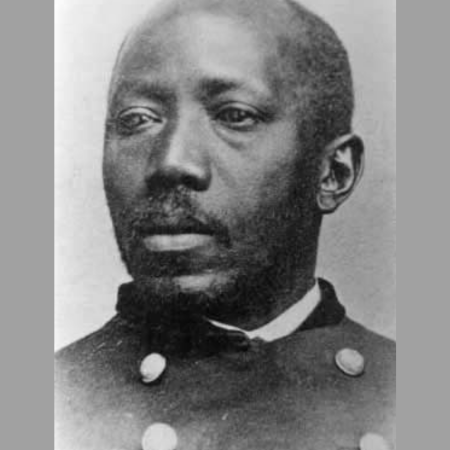
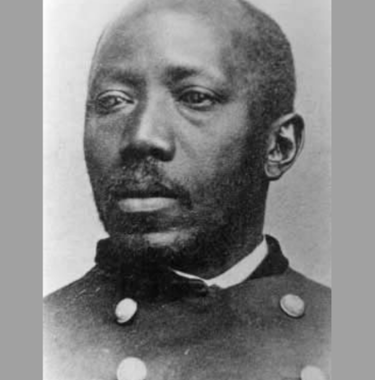
Martin Robison Delany: The Architect of Black Sovereignty and the Uncompromising Blueprint for Self-Determination
There is a version of 19th-century Black American history in which Frederick Douglass stands at the center of everything — the escaped slave who became the era's greatest orator, the abolitionist statesman who argued the moral case for Black freedom with such eloquence that even hostile audiences could not dismiss him. That version of history is not wrong. But it is a version that, in centering Douglass, has consistently pushed to the margins someone whose vision was in many respects more radical, more strategically sophisticated, and more prophetic: Martin Robison Delany.
Delany and Douglass were colleagues, co-conspirators, and ultimately ideological adversaries. They shared a commitment to the end of slavery and the liberation of Black people in America. But they differed fundamentally on what liberation actually required and what it actually looked like. Douglass believed, with passionate conviction, that America could be reformed — that its founding ideals, properly applied, could include Black people in the full promise of citizenship and equality. Delany believed, with equally passionate conviction, that this was a category error: that you could not reform a system built on Black exclusion into one that genuinely included Black people by appealing to the values that had justified the exclusion in the first place.
This disagreement was not merely intellectual. It was a genuine strategic divide about how liberation happens. And in the more than 150 years since both men made their cases, history has provided evidence for both positions — which is why Delany's analysis, so often treated as the more extreme position, deserves the serious engagement it rarely receives.
Born Free, Raised in Defiance
Martin Robison Delany was born in 1812 in Charles Town, Virginia — in the territory that would eventually become West Virginia. He was born free, which in the antebellum South was a legal status that conferred almost none of the freedom the word implies. Free Black people in the slave states lived under a web of legal restrictions that governed their movement, their economic activity, their access to education, and their political participation. Freedom, in this context, meant not enslaved. It did not mean equal, safe, or genuinely at liberty.
His mother, Pati Delany, understood this distinction clearly and acted on it with extraordinary courage. When the family's possession of spelling books — their attempt to educate their children — came to the attention of authorities who enforced Virginia's laws against Black literacy, Pati gathered her children and fled north to Pennsylvania. This was not a small act. It was an illegal one that risked violence and the destruction of the family. She did it anyway.
The lesson embedded in this founding act stayed with Delany for his entire life: that the right to think, to read, to develop one's own mind was worth any risk to defend. And that systems designed to deny that right would not yield it voluntarily — they had to be outmaneuvered, defied, or fled.
Building the Infrastructure of Black Voice
By the time Delany reached his thirties, he had established himself as one of the most significant Black intellectuals and organizers in the antebellum North. In 1843, he founded The Mystery in Pittsburgh — one of the earliest independent Black-owned newspapers in American history. The paper was explicitly political, using journalism as a tool of social organization: reporting on the conditions facing Black people, challenging the arguments of white supremacists, and building the kind of shared public consciousness that collective action requires.
His prominence as a journalist brought him into contact with Frederick Douglass, and for several years the two men served as co-editors of The North Star, which became one of the most important abolitionist publications of the era. The partnership was productive and intellectually generative. It also revealed the growing differences in their approaches.
Douglass was the orator. His genius was for the spoken word, for reaching audiences through the moral weight of his personal testimony and the rhetorical force of his arguments. Delany was the organizer. He spent years traveling across the North, building subscriptions, establishing local networks, making The North Star not just a publication but a node in a growing infrastructure of Black political life.
Where Douglass focused on persuading white audiences of the moral case for Black freedom, Delany was increasingly focused on building the capacity of Black communities to act in their own interests regardless of whether white audiences were persuaded. This is a subtle but crucial difference. One strategy depends on changing the minds of those in power. The other strategy builds the power to act without needing those minds to change.
The Harvard Moment and the Conversion of a Philosophy
In 1850, Delany's career took a turn that permanently shaped his political philosophy. He was admitted to Harvard Medical School — one of the first Black students ever admitted to any American medical school. He was there for a single semester before the white students organized to have him expelled. Their petition to the faculty was explicit: his presence devalued their degrees. The faculty complied.
Take a moment with this. This is not a man who was denied access to education. This is a man who achieved access to the highest levels of American education through his own merit and intellectual excellence — and was expelled not because of any failure of his own but because his presence was deemed incompatible with the comfort of white students. The institution whose motto was Veritas — truth — expelled a qualified student to maintain a racial hierarchy.
Delany returned to Pittsburgh and continued to practice medicine without the degree, serving the Black community in Pittsburgh with competence and dedication. But the Harvard experience crystallized something in him. He had seen, at the highest level, that no degree of individual achievement could protect a Black person from systemic exclusion. The system was not designed to evaluate Black merit. It was designed to preserve white advantage. No amount of excellence within that system could fundamentally alter its structure.
This realization did not make Delany abandon the pursuit of excellence. It made him conclude that excellence had to be pursued within institutions that Black people built and controlled, not within institutions that could and would use Black talent to serve white interests and then discard it when inconvenient.
The Nation Within a Nation: A Blueprint for Sovereignty
In 1852, Delany published what is now recognized as one of the foundational texts of Black political thought: The Condition, Elevation, Emigration, and Destiny of the Colored People of the United States. The title is long and somewhat unwieldy. The argument is devastating in its clarity.
Delany's central claim was that Black Americans occupied the position of a colonized people — a nation within a nation — whose relationship to the United States was structurally comparable to the relationship between colonized peoples and European empires. They were present, they were productive, they contributed their labor and their creativity to the national economy, and they were systematically excluded from the political, legal, and economic systems that organized that economy to serve white interests.
Given this structural reality, Delany argued, the path to genuine freedom could not run through appeals to American ideals that had never been intended to apply to Black people. It had to run through the construction of independent Black political and economic power — power that did not depend on white permission, white goodwill, or white reform.
This is what he meant by his argument for emigration and eventual nationhood. He was not arguing that Black Americans should flee. He was arguing that a people who were effectively colonized within their own society needed to build the kind of independent political infrastructure that colonized peoples historically built when they sought liberation. Sovereignty, not integration. Self-determination, not accommodation.
This analysis would resurface, in different forms and with different strategic proposals, in nearly every major Pan-African thinker who came after him. The specific proposals — where to build, how to build, through what political mechanisms — were debated endlessly. The underlying diagnosis was almost never successfully refuted.
The African Expedition: Pan-Africanism in Practice
By 1859, Delany had moved from theory to action in the most direct way possible. He led an expedition to West Africa — specifically to the Abeokuta region in what is now Nigeria — with the explicit purpose of exploring the establishment of a settlement for African Americans who chose to emigrate.
The expedition was diplomatically sophisticated. Delany negotiated directly with local Egba leaders, securing agreements that would have provided land and governance frameworks for a settlement. He was operating not as a tourist or an observer but as a statesman — representing the interests of a potential immigrant population and building the bilateral relationships that settlement would require.
This put him in direct contact with the complex realities of continental Africa at a moment when the pressures of European colonization were already being felt along the West African coast. He met African leaders who were navigating the competing pressures of internal governance, regional conflict, and the advancing edge of European commercial and political expansion. He saw both the possibilities and the vulnerabilities that African independence represented in the mid-19th century.
The Civil War interrupted the emigration project before it could be realized. But the expedition itself demonstrated something significant: that the Pan-African vision, the same vision that Henry Sylvester Williams would institutionalize on the global stage four decades later, was capable of being translated into practical diplomatic and political action. Delany was not simply theorizing about African sovereignty. He was negotiating it.
The Military Commission: Making the Contradiction Visible
When the Civil War broke out, Delany redirected his energy toward the conflict with characteristic strategic acuity. He recognized immediately that the war was not simply a conflict about states' rights or national unity. It was a conflict about the fundamental question of whether Black people in America would remain enslaved. That made it a conflict Black men had an existential stake in — and that Black men could use to reframe the terms of their relationship to American society.
He became a major recruiter for the 54th Massachusetts Infantry, the famous Black regiment that became a symbol of Black military capability and sacrifice, most dramatically at the assault on Fort Wagner in 1863. He understood that Black soldiers, performing with distinction in defense of the Union, created a moral argument for Black citizenship that was harder to dismiss than any speech or pamphlet.
In February 1865, Delany secured a private meeting with President Abraham Lincoln. He proposed the creation of an army of Black troops led by Black officers — a military structure that would both accelerate Union victory and create a cadre of Black men with the military training, organizational experience, and public standing to lead the reconstruction of Black political life in the South.
Lincoln was impressed enough to act. Delany was commissioned as a Major in the United States Army — the first Black man to hold a field commission in American military history. The commission was not just a personal achievement. It was, as Delany understood, a public demonstration that the premise of racial hierarchy — the claim that Black men were inherently incapable of leadership, command, and the exercise of authority — was false. He had made the contradiction between American ideals and American practice visible in the most direct way possible.
The Freedmen's Bureau Years: Building Reconstruction
After the war, Delany served with the Freedmen's Bureau in South Carolina, working directly with formerly enslaved people who were attempting to build independent lives in the immediate aftermath of emancipation. His work there was practical and unglamorous: negotiating labor contracts, establishing access to education, mediating disputes, helping people build the material foundations that freedom required.
This work reveals something important about Delany's character and commitments. For a man of his intellectual range and political ambition, Freedmen's Bureau work was not prestigious. It was the daily administrative labor of actually building the conditions for Black freedom on the ground, one contract and one school and one land dispute at a time. He did it because he understood, with the same clarity that Alexander Crummell brought to his institution-building work, that the liberation of a people is not achieved in moments of high drama. It is achieved in the accumulation of daily work that builds capacity, knowledge, and material security.
He continued to write, to organize, and to run for public office — including a campaign for Lieutenant Governor of South Carolina — in the years that followed. He remained politically active until the end of his life, still arguing the case for Black sovereignty, still insisting that genuine freedom required the presence of independent power, until his death in 1885.
The Measure of His Legacy
Martin Robison Delany died more than a century before the language of decolonization, structural racism, and Black liberation entered mainstream political discourse. But the analysis he developed — that Black people in America occupied a structurally colonized position, that liberation required independent power rather than inclusion within existing structures, that economic sovereignty and political sovereignty were inseparable — is the analysis that the most rigorous Black political thinkers of the 20th and 21st centuries have kept returning to.
He was not simply a man ahead of his time. He was a man whose time has not yet fully arrived — whose blueprint has not yet been fully executed. The questions he asked about ownership, governance, and the material conditions of Black freedom remain the questions the diaspora must answer.
The full Pan-African tradition is clear: what Delany began, what Williams institutionalized, what Garvey mobilized, what Nkrumah built toward on the continent — all of it points in the same direction. Not inclusion in the existing order. Sovereignty within a remade one.
Delany knew it first.
Complete the series:
What Our Pan-African Ancestors Were Trying to Tell Us: Unity, Sovereignty, and the Blueprint Diaspora Wars Are Destroying
This is the work of Black Sovereignty. Delany's blueprint for independent nationhood, economic control, institutional power, and global solidarity, is the foundation of Volume One.
→ Get your copy Black Sovereignty
THE BLUEPRINT
Contact
hello@blackmetrics.space
Copyright © 2026 The Black Metrics. All Rights Reserved.
The BlaCK METRICS
The Pillars
Strategic Stream Blog